
Are you tired of affiliate programs that promise the world but deliver pennies? What if you could tap into a multi-trillion dollar industry that’s begging for digital marketers just like you? The insurance world has radically transformed, and modern tech-first companies like Lemonade and Insurify are leading the charge, creating a goldmine for affiliates who know how to play the game. This isn’t your grandfather’s insurance sales pitch. This is the modern playbook for partnering with disruptive insurtech giants, driving high-quality traffic, and building a sustainable, high-commission income stream. Forget what you think you know about insurance marketing and get ready to learn the strategies that top affiliates are using right now.
Why Is the Insurance Affiliate Niche a Goldmine in 2025?
The insurance industry is evergreen. People will always need insurance for their homes, cars, pets, and lives. However, the way people buy insurance has changed forever. Gone are the days of stuffy offices and confusing paperwork. Today’s consumers, especially millennials and Gen Z, crave digital-first, transparent, and hassle-free experiences. This is where insurtech companies like Lemonade, with its AI-powered platform, and Insurify, a leading comparison site, have completely disrupted the market.
This massive shift creates an unprecedented opportunity for affiliate marketers. You are the bridge between these innovative companies and the millions of consumers actively searching online for better insurance solutions. By understanding how to get approved for insurance affiliate programs and mastering the art of promotion, you can earn substantial commissions, often on a recurring basis. The best insurance affiliate programs for beginners are no longer hidden; they are actively seeking partners to help fuel their growth.
Understanding the Key Players: Lemonade vs. Insurify Affiliate Programs
Before diving into strategies, it’s crucial to understand the major players you’ll be partnering with. Lemonade and Insurify represent two different but equally powerful models in the insurtech space.
The Lemonade Affiliate Program Review: A Deep Dive into a Disruptor
Lemonade has taken the industry by storm with its focus on renters, homeowners, pet, and term life insurance. Their brand is built on social good, artificial intelligence (AI), and a ridiculously simple user experience.
- What Makes the Lemonade Program Attractive? The Lemonade insurance affiliate commission structure is competitive, often paying a flat fee per qualified quote. Their brand recognition is incredibly high, which means conversion rates are often better than with lesser-known companies. They provide excellent marketing materials and a platform that users genuinely love, making your job as an affiliate much easier.
- Finding the Lemonade Affiliate Program Sign-Up Link: Lemonade typically runs its affiliate program through major networks like Impact or PartnerStack. A simple search for “Lemonade affiliate program” will lead you to the official application page. The approval process involves reviewing your website or marketing channels to ensure they align with Lemonade’s brand values.
The Insurify Affiliate Program Review: The Power of Comparison
Insurify operates as an insurance comparison platform, or a “meta-market.” Users can compare quotes from dozens of top carriers in minutes. This is a powerful value proposition that resonates with consumers looking for the best deal.
- Why Partner with Insurify? The Insurify affiliate program payout is often based on generating qualified leads. Because you are offering a tool that saves consumers time and money, the motivation to click and compare is high. This is one of the top pay-per-lead affiliate programs insurance offers. You aren’t selling a single brand; you’re selling the smart way to shop for insurance.
- How to Become an Insurify Affiliate Partner: Similar to Lemonade, Insurify manages its program through established affiliate networks. The application will require details about your audience and promotional methods. They are looking for partners who can drive relevant traffic—consumers actively in the market for auto, home, or life insurance.
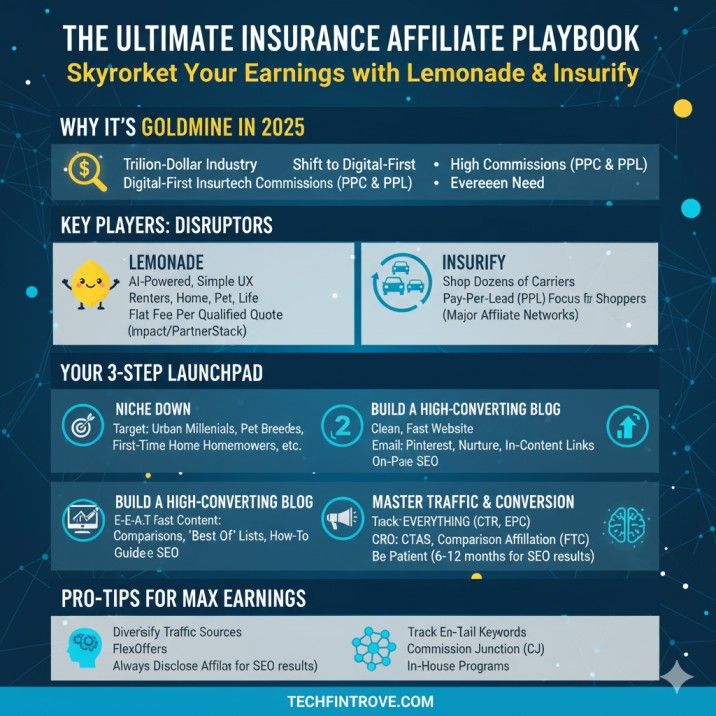
The Step-by-Step Guide to Launching Your Insurance Affiliate Website
Having a professional, trustworthy website is non-negotiable for success. This is your digital storefront and the foundation of your entire strategy.
Step 1: Choosing a Niche Within the Insurance Vertical
Don’t try to be everything to everyone. Niche down to increase your authority and relevance. Instead of a general “insurance” blog, focus on a specific area.
- High-Potential Insurance Affiliate Niches for 2025:
- Renters insurance for urban millennials
- Pet insurance for specific breeds (e.g., French Bulldogs, Golden Retrievers)
- Auto insurance for first-time car owners or students
- Homeowners insurance for new construction homes
- Life insurance for young families
By choosing a niche, you can create highly targeted content that directly answers the long-tail keywords for pet insurance affiliates or local SEO for insurance agents and affiliates.
Step 2: Building a High-Converting Affiliate Blog
Your blog is where you will build trust and guide your audience. Focus on creating a clean, fast-loading website. Building a successful online platform is a key part of any modern digital strategy, and understanding how to monetize it is crucial. As we discuss in our post on monetizing AI applications, creating value through content is the first step toward generating revenue.
- Content Strategy is Everything: Your goal is to create content that solves problems. Think from the user’s perspective. What are they searching for?
- Comparison Posts: “Lemonade vs. Toggle Renters Insurance”
- “Best of” Lists: “5 Best Pet Insurance Plans for Older Dogs”
- How-To Guides: “How to Lower Your Car Insurance Premium in 5 Steps”
- Review Articles: “An Honest Insurify Auto Insurance Review 2025”
This approach establishes your E-E-A-T (Experience, Expertise, Authoritativeness, and Trustworthiness), which is a critical ranking factor for Google, especially in financial niches.
Step 3: Advanced SEO Strategies for Insurance Affiliate Marketing
Getting your content seen is the most important part of the puzzle. This requires a sophisticated approach to SEO that goes beyond basic keyword stuffing.
- Mastering Long-Tail Keywords: Broad terms like “car insurance” are nearly impossible to rank for. Instead, target specific, long-tail phrases that indicate user intent. For example, instead of “home insurance,” target “how much is homeowners insurance for a 1500 sq ft house.” These users are much closer to making a purchase decision.
- On-Page SEO Checklist for Insurance Affiliates:
- Use your primary long-tail keyword in your title, meta description, and the first paragraph.
- Incorporate related keywords and synonyms throughout the text naturally.
- Use keyword-rich headers (H2, H3) to structure your content.
- Optimize images with descriptive alt text.
- Include internal and external links to authoritative sources. For instance, linking to a trusted financial institution like Fidelity when discussing financial planning can boost your credibility.
Beyond Blogging: Proven Traffic Generation Methods for Affiliates
While a blog is your home base, you need to build highways that lead traffic to it. Diversifying your traffic sources protects you from algorithm changes and expands your reach.
Leveraging Social Media for Insurance Lead Generation
Social media is not just for sharing photos; it’s a powerful tool for community building and driving targeted leads.
- Pinterest for Insurance Affiliates: Pinterest is a visual search engine, perfect for creating infographics like “7 Factors That Affect Your Car Insurance Rate” or “Renters Insurance Checklist.” Each pin can link directly back to a relevant blog post.
- Facebook Groups: Find and participate in groups for renters, new homeowners, or pet lovers. Don’t spam your links. Instead, provide genuine value by answering questions and becoming a trusted resource. When appropriate, you can share a link to your content that solves a specific problem discussed in the group.
Email Marketing: Your Most Valuable Asset
An email list is a direct line of communication with your audience that you own. It’s one of the most effective channels for maximizing insurance affiliate earnings.
- Building Your List: Offer a valuable freebie (lead magnet) in exchange for an email address. This could be a PDF guide like “The Ultimate Guide to First-Time Home Insurance” or a simple checklist.
- Nurturing Your Subscribers: Don’t just send promotional emails. Use a sequence to build trust. Share valuable tips, personal stories, and helpful articles. Then, you can weave in your affiliate recommendations for programs like Lemonade or Insurify in a way that feels helpful, not salesy. Managing payments and transactions is a core part of any online business, and a reliable payment gateway is essential. Learning about platforms like Stripe, as detailed in our article on Stripe blog post ideas, can provide valuable insights into the financial backend of your affiliate venture.
Advanced Tactics: Maximizing Your Affiliate Commissions
Once you have traffic, the next step is to optimize your conversion rates.
Conversion Rate Optimization (CRO) for Affiliate Links
How and where you place your links can dramatically impact your click-through rate and earnings.
- Use In-Content Links: Place your affiliate links directly within your blog posts where they make contextual sense.
- Call-to-Action (CTA) Buttons: Use clear, compelling buttons like “Get a Free Renters Quote from Lemonade” or “Compare Car Insurance Rates Now.” Buttons almost always outperform simple text links.
- Comparison Tables: Create easy-to-read tables that compare the features of different insurance providers. Include your affiliate links in the “Check Price” or “Learn More” buttons for each provider. This is an incredibly effective affiliate marketing strategy for the insurance industry.
Tracking and Analyzing Your Performance
You can’t improve what you don’t measure. Use affiliate dashboard analytics and tools like Google Analytics to understand what’s working.
- Key Metrics to Track:
- Click-Through Rate (CTR) on your affiliate links.
- Conversion Rate (how many clicks turn into qualified leads or sales).
- Earnings Per Click (EPC).
- Top-performing pages and content.
By analyzing this data, you can double down on your most profitable strategies and increase insurance affiliate sales. For a deeper dive into financial models, understanding the economics behind major ventures like the IPL can offer fascinating parallels, which you can read about in our analysis of the IPL’s business model.
Frequently Asked Questions (FAQ) About Insurance Affiliate Marketing
1. Is insurance affiliate marketing profitable?
Absolutely. The insurance industry has high-value commissions, and since it’s an essential service, there is a constant stream of customers. Success depends on your ability to drive targeted traffic and build trust with your audience.
2. How much do insurance affiliates make?
Earnings vary widely. Beginners might make a few hundred dollars a month, while top-tier affiliates can earn five or six figures monthly. Payouts can range from $10-$40 per lead to over $100 per sale, depending on the insurance product.
3. Do I need a license to be an insurance affiliate?
Generally, no. As an affiliate, you are a marketer, not a licensed agent. You are generating leads, not selling or advising on policies. However, you must always adhere to FTC guidelines by clearly disclosing your affiliate relationships.
4. What are the best insurance affiliate networks?
Top networks for finding programs like Lemonade and Insurify include Impact, FlexOffers, Commission Junction (CJ), and ShareASale. Many companies also run their own in-house programs.
5. How do I get approved for programs like Lemonade or Insurify?
You need a professional-looking website with high-quality, relevant content and an established traffic source. They want to see that you have a real audience that aligns with their target customer.
6. Can I promote auto insurance affiliate programs without a website?
While possible using social media or paid ads, it’s much harder. A website or blog serves as your central hub, builds credibility, and is a long-term asset that generates organic traffic from search engines.
7. What is a pay-per-lead insurance affiliate program?
This is a model where you get paid every time a user you refer fills out a quote request form. You earn a commission even if they don’t purchase a policy, making it a popular model for beginners.
8. How can I find low-competition keywords for the insurance niche?
Use SEO tools like Ahrefs or SEMrush and focus on long-tail keywords (4+ words). Look for informational queries like “what does renters insurance cover from theft” or “best car insurance for 18-year-old female.”
9. What’s more profitable: home, auto, or life insurance affiliate programs?
Life insurance affiliate programs typically offer the highest one-time commissions due to the high lifetime value of a customer. Auto and home insurance offer more volume and potential for recurring commissions or consistent lead payouts.
10. How important is content quality for ranking on Google?
It is the single most important factor. For financial topics (“Your Money or Your Life” – YMYL), Google holds content to the highest standard of E-E-A-T. Your content must be accurate, comprehensive, and demonstrate expertise.
11. Should I focus on SEO or paid ads to promote my offers?
For long-term, sustainable success, SEO is superior. It builds a free, organic traffic source. Paid ads can provide faster results and are great for testing offers, but they require a significant budget and expertise to manage profitably.
12. What are the top affiliate programs besides Lemonade and Insurify?
Other top programs to explore include Gabi, The Zebra, Esurance, Allstate, and Liberty Mutual. It’s best to join a mix of programs to diversify your income.
13. How do I write a good insurance product review?
Be honest and balanced. Discuss both the pros and cons. Cover key details like coverage options, customer service, claim process, and pricing. Use real user testimonials if possible to build social proof.
14. What common mistakes should I avoid as a new insurance affiliate?
Avoid trying to promote too many products at once, neglecting to build an email list, creating low-quality content, and not properly disclosing your affiliate status.
15. How long does it take to start making money with insurance affiliate marketing?
Be patient. It typically takes 6-12 months of consistent effort in content creation and SEO to start seeing significant organic traffic and income. This is a long-term business model, not a get-rich-quick scheme.