The Indian Premier League (IPL) is more than just a cricket tournament; it’s a colossal financial powerhouse. When you see a player hit a six or a bowler take a wicket, you’re witnessing the on-field result of a massive off-field financial strategy. Have you ever wondered how IPL teams manage their multi-million dollar budgets? Or how they land those eye-watering sponsorship deals that plaster logos on everything from jerseys to boundary ropes?
This is not just a game of cricket; it’s a high-stakes game of numbers. Understanding IPL team economics is key to appreciating the league’s incredible success. This in-depth guide will pull back the curtain on the financial aspects of how IPL teams manage budgets and sponsorships. We will explore the intricate IPL franchise financial model, break down the diverse revenue streams, and reveal the secrets behind effective IPL team budget management. Whether you’re a die-hard fan or a finance enthusiast, you’re about to discover the sophisticated business operations that fuel the world’s most glamorous cricket league.
The Multi-Million Dollar Blueprint: How an IPL Franchise Financial Model Actually Works
At its core, an IPL franchise operates like any major business. It has significant revenue sources and equally substantial expenses. The goal is simple: achieve profitability while building a competitive team. The entire financial structure is a delicate balancing act, heavily influenced by the Board of Control for Cricket in India (BCCI) and the team’s own commercial acumen.
Central Revenue Pool vs. Local Revenue: A Detailed Breakdown of Where the Money Comes From
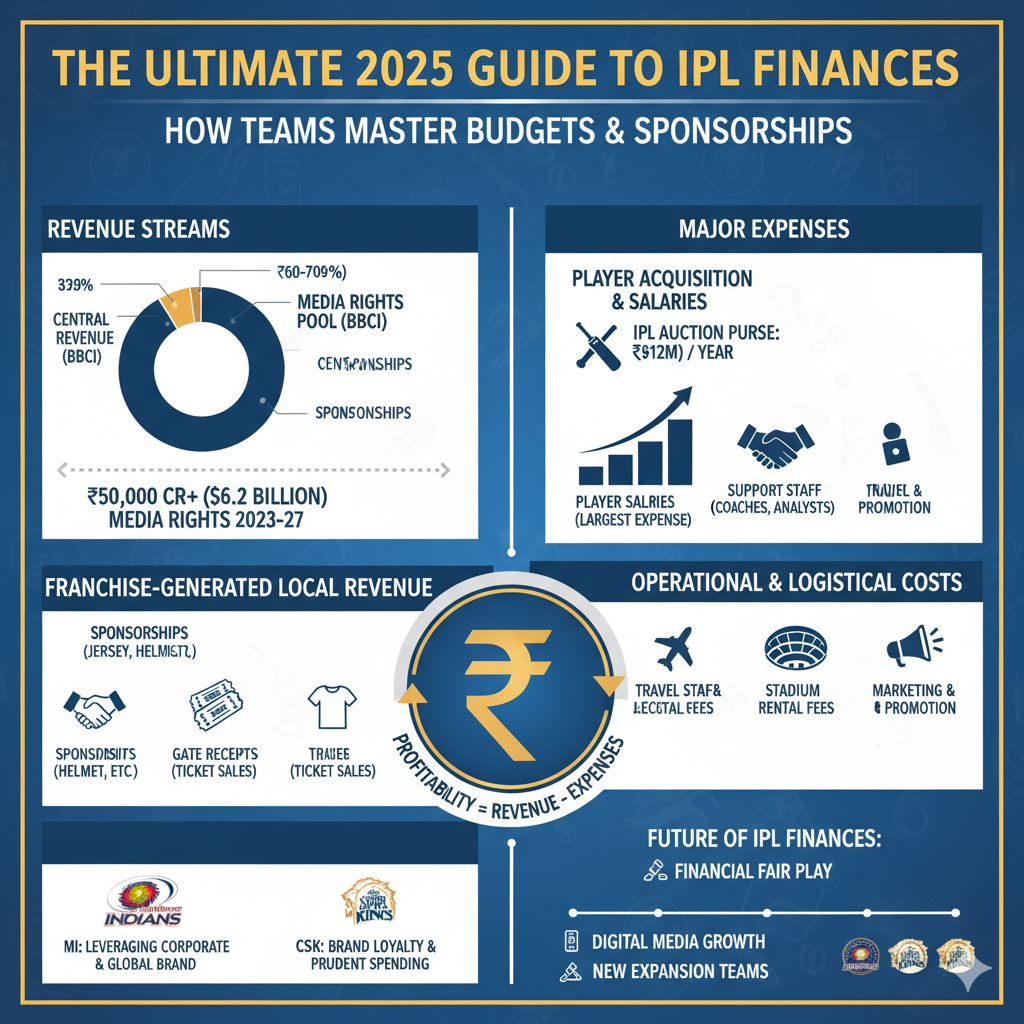
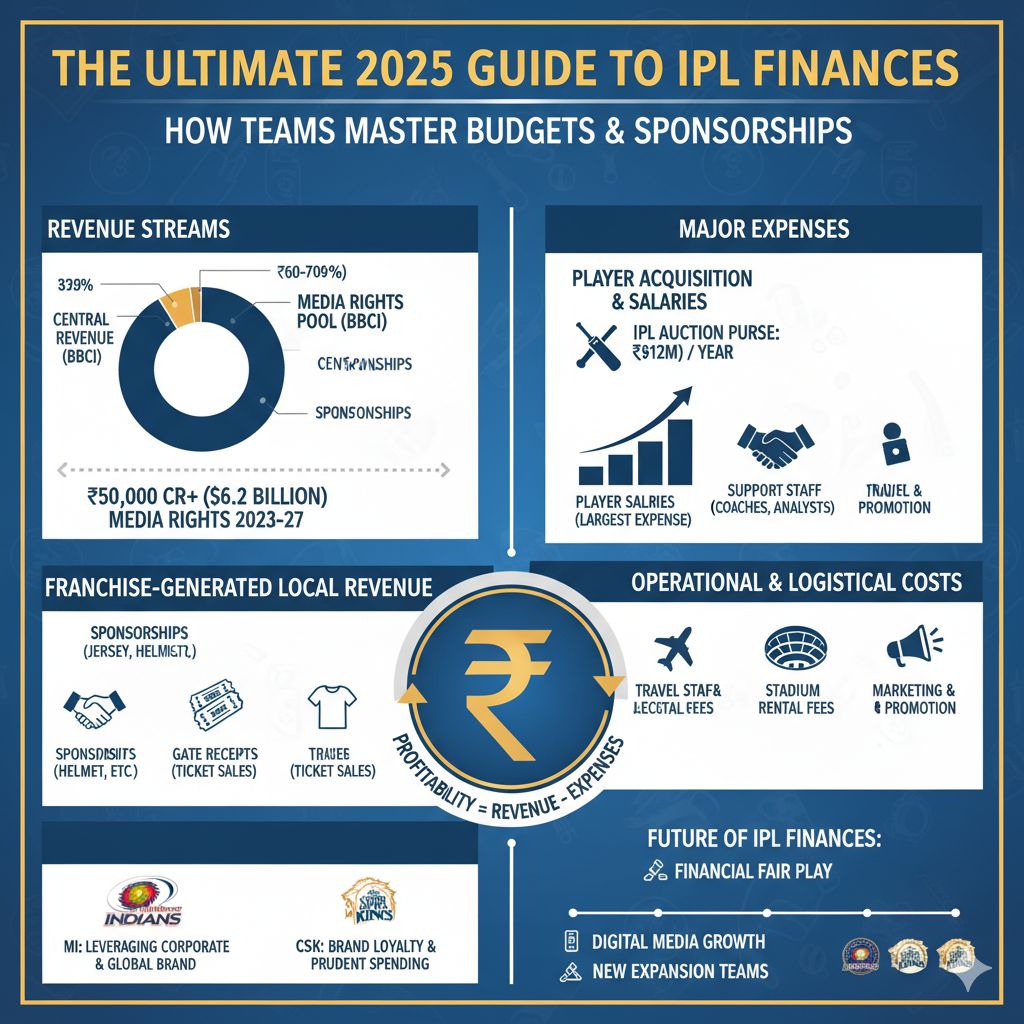
An IPL team’s income isn’t a single stream; it’s a river fed by multiple tributaries. These can be broadly categorized into two main areas: the central revenue pool managed by the BCCI and the local revenue generated by the franchise itself.
- The BCCI’s Central Revenue Pool: This is the financial bedrock for every franchise. The BCCI negotiates mega-deals for media rights and central sponsorships (like the tournament’s title sponsor) and distributes a significant portion of this income among the teams. The IPL media rights revenue distribution is the single largest contributor to a team’s coffers. For the 2023-2027 cycle, these rights were sold for a staggering $6.2 billion. After deducting its own fees, the BCCI shares a large percentage of this pool equally among the franchises. This model ensures that even less successful teams have a stable financial foundation to build upon.
- Franchise-Generated Local Revenue: This is where savvy teams separate themselves from the pack. Local revenue includes:
- Sponsorships: This is a huge earner. From the main logo on the jersey to smaller logos on helmets and trousers, every space is prime real estate. We’ll dive deeper into IPL sponsorship deals and their value later.
- Gate Receipts (Ticket Sales): The roaring crowds are not just for moral support. How ticket sales affect IPL team revenue is significant. Teams get a substantial share of the ticket money from their home games. A team with a large, loyal fanbase and a big stadium can generate millions from this stream alone.
- Merchandise Sales: The merchandise sales strategy for IPL teams is a growing area. Selling official jerseys, caps, and other fan gear directly connects the team with its supporters and creates a lucrative revenue stream.
- Prize Money: While not a reliable source of income, winning the tournament comes with a handsome cash prize, which is a welcome bonus to the bottom line.
Understanding the Major Expenses: A Look at Where All the Money Goes
Running an IPL team is an expensive affair. The costs are immense and require meticulous financial planning for a professional sports team. The biggest outflows of cash are player salaries and operational costs.
- Player Acquisition and Salaries: The most visible expense is the player auction. Each team is given a fixed IPL auction purse (₹100 crore or roughly $12 million for 2024) to build its squad. The strategy for buying players in the IPL auction is a masterclass in financial management. Teams must balance spending on marquee superstars with finding value-for-money domestic and uncapped players. The financial impact of marquee player signings can be huge, not just in salary but also in brand value. Beyond the auction, player salaries form the largest chunk of the annual budget.
- Operational and Logistical Costs: These are the hidden operational costs of running an IPL franchise. This broad category includes:
- Salaries for support staff (coaches, physios, analysts, management).
- Travel and accommodation costs for the team throughout the two-month tournament.
- Stadium rental fees for home games.
- Marketing, advertising, and promotional event expenses.
- Administrative and day-to-day business operational costs.
Managing operational costs in the IPL effectively is crucial for staying in the black.
Beyond the Jersey: A Deep Dive into IPL Team Sponsorship Strategies
Sponsorship is the lifeblood of an IPL team’s local revenue. It’s a symbiotic relationship: brands get massive visibility by associating with a popular team, and the team gets the funds it needs to operate. The Mumbai Indians sponsorship revenue model, for instance, is a case study in leveraging a powerful brand to attract a diverse portfolio of high-value partners.
How Do IPL Teams Attract High-Value Sponsorship Deals?
Securing a lucrative sponsorship isn’t as simple as slapping a logo on a shirt. It requires a sophisticated sales and marketing strategy. Teams focus on several key areas to attract brands:
- Brand Alignment and Demographics: Teams pitch to brands whose target audience aligns with their own fan base. A team with a youthful following might attract tech gadgets and lifestyle brands, while a team with a more family-oriented fan base might appeal to FMCG companies.
- Performance and Star Power: On-field success and a roster of star players make a team far more attractive to potential sponsors. A team that consistently makes the playoffs offers more screen time and visibility for its sponsors.
- Fan Engagement Metrics: In the digital age, it’s all about engagement. Teams provide potential sponsors with detailed analytics on their social media reach, follower engagement rates, and digital footprint. This data-driven approach demonstrates the tangible value a brand will receive.
- Creating Custom Activation Platforms: The best negotiating sponsorship deals for sports teams involves offering more than just logo placement. Teams create unique digital campaigns, fan events, and exclusive content featuring the sponsor’s products, thereby maximizing sponsorship ROI in the IPL for the brand.
Anatomy of an IPL Sponsorship Package: What Brands Are Really Paying For
The cost of sponsoring an IPL team varies wildly depending on the level of association. The types of IPL sponsorship packages are typically tiered:
- Title Sponsor: This is the most expensive and visible slot, usually featured front and center on the team’s jersey. This can cost anywhere from $5 million to $15 million per year.
- Principal/Associate Sponsors: These brands occupy other prominent locations on the jersey (like the back or sleeves), helmets, and trousers.
- Official Partners: This tier includes a range of categories like the official beverage partner, official digital partner, or official airline partner. These deals offer specific rights and a lower level of visibility compared to jersey sponsors.
Each package offers a bundle of rights, including logo placement, a certain number of tickets for matches, player appearances for promotional events, and digital media collaborations.
Winning Off the Field: Advanced IPL Team Budget Management Techniques
Spectacular on-field performances are often built on a foundation of shrewd off-field financial management. The most successful franchises are masters of budgeting, using data and strategy to make every dollar count. This is where the real game is won and lost. For a deeper look into the business side of sports, platforms like Sportico offer incredible analysis.
The IPL Auction Decoded: A Complete Financial Strategy Guide
The IPL auction is the ultimate test of a team’s financial strategy. It’s a high-pressure environment where fortunes are made and lost. Effective IPL auction purse management tips are guarded secrets, but successful strategies often involve:
- Deep Data Analysis: Teams no longer rely on gut feelings. An entire analytics department crunches numbers on player performance in different conditions, their injury history, and their potential market value versus their base price. This is a core part of the role of data analytics in IPL financial planning.
- Balancing Stars and Value Buys: Every team wants superstars, but they come at a premium. The smartest teams identify undervalued players—perhaps a domestic player on the verge of a breakout season or an international player whose skills are perfect for Indian conditions. This is key to a balanced squad.
- Knowing When to Fold: One of the hardest things to do in an auction is to let a target player go when the bidding exceeds your carefully calculated maximum price. Getting into emotional bidding wars is the quickest way to wreck a team’s budget and structure.
How Data Analytics is Revolutionizing IPL Financial Planning and Operations
The use of data goes far beyond the auction. Analytics now permeates every aspect of an IPL franchise’s financial operations:
- Dynamic Ticket Pricing: Teams use data on demand for certain matches (e.g., a game against a rival) to adjust ticket prices and maximize revenue.
- Sponsorship Valuation: Analytics helps teams prove their value to sponsors by providing concrete data on brand visibility, media mentions, and social media sentiment.
- Fan Behavior Analysis: By understanding what merchandise fans buy and what content they engage with online, teams can create more targeted and profitable marketing campaigns.
Achieving Profitability: The Break-Even Analysis for an IPL Team
For many years, owning an IPL team was a passion project that lost money. However, with the explosion in media rights and sponsorship values, the path to profitability is much clearer. The break-even point for an IPL team is the point where its total revenue equals its total costs.
The key to how IPL teams stay profitable is twofold: controlling player salary costs (which are capped by the auction purse) and aggressively growing local revenues through smart sponsorship deals, high ticket sales, and expanding merchandise lines. An IPL team profitability analysis today shows a much healthier financial picture across the league than a decade ago.
Learning from the Champions: Financial Strategy Case Studies of Successful IPL Teams
To truly understand the theory, let’s look at the practice. The financial models of consistently successful teams like the Chennai Super Kings and Mumbai Indians offer invaluable lessons.
The Chennai Super Kings Financial Strategy: A Masterclass in Brand Loyalty
CSK’s success is built on a foundation of consistency and incredible brand loyalty. Their financial strategy reflects this:
- Player Retention: CSK has historically focused on retaining a core group of players, led by MS Dhoni. This builds a stable team environment and a deep connection with the fans, which in turn makes the brand more attractive to long-term sponsors.
- Sponsorship Continuity: They have maintained long-standing relationships with many of their sponsors, providing stability and predictable revenue streams.
- Prudent Auction Spending: CSK is rarely seen engaging in frantic, high-priced bidding wars. They identify their targets, set a price, and stick to it, demonstrating a disciplined financial model of a successful IPL team.
Inside the Mumbai Indians Sponsorship Revenue Model: Leveraging Corporate Power
As a team owned by one of India’s largest conglomerates, Reliance Industries, Mumbai Indians has a unique corporate advantage.
- High-Value Brand: MI has cultivated an image of being the “glamour” team of the IPL, featuring superstars and playing in a major metro city. This allows them to command premium sponsorship rates. Business publications like the Economic Times often detail the scale of these corporate partnerships.
- Diverse Portfolio: They have one of the most diverse sponsorship portfolios in the league, with partners across numerous sectors, from banking and e-commerce to electronics and automobiles. This diversification minimizes financial risk.
- Global Brand Appeal: With international stars and a history of success, MI has cultivated a global fanbase, which helps them attract international brands looking to enter the Indian market. This answers the question of how big brands choose IPL teams to sponsor.
What’s Next? The Evolving Financial Landscape of the Future of the IPL
The financial engine of the IPL is constantly evolving. Looking ahead, several trends are set to shape the league’s economic future.
The impact of digital media on IPL revenue will continue to grow exponentially. As more fans consume content on streaming platforms and social media, digital sponsorship and advertising will become even more valuable than traditional television. We may also see the introduction of stricter financial fair play rules in the IPL to ensure a level playing field and prevent unsustainable spending by wealthier teams.
Furthermore, with the potential addition of new expansion teams, the overall financial pie will get bigger, but the revenue-sharing model may need to be adjusted. The future trends in sports financing point towards more sophisticated, data-driven models that will make running an IPL team more of a science than ever before. For further insights into sports team valuations, Forbes is an excellent resource for detailed financial breakdowns.
In conclusion, the financial management of an IPL team is a complex and fascinating world. It’s a sophisticated business that combines media rights, high-value sponsorships, strategic budgeting, and deep data analysis. The next time you watch a thrilling IPL match, remember that the victory on the field was first scripted in the spreadsheets and boardrooms, where financial acumen is just as important as cricketing talent.
Frequently Asked Questions About IPL Team Finances
1. How much does an IPL franchise cost to run annually?
The annual operating cost for an IPL franchise can range from $25 million to $40 million (approx. ₹200-330 crore). The biggest expenses are the player salaries (capped at the auction purse of ₹100 crore) and other operational costs like staff salaries, travel, stadium fees, and marketing.
2. What percentage of IPL revenue comes from media rights?
The central revenue pool, primarily funded by media rights, typically accounts for 60-70% of a franchise’s total income. This makes it the single most important revenue stream and ensures the financial stability of all teams in the league.
3. How do player salaries impact the overall budget of an IPL team?
Player salaries are the largest single expense for a team. The salaries are determined by the auction bids or retention fees and are paid out from the total auction purse provided to each team. Managing this purse effectively is critical to building a balanced team without overspending.
4. What are the financial risks involved in owning an IPL team?
The main financial risks include poor on-field performance, which can lead to lower sponsorship value and prize money. Other risks involve economic downturns affecting sponsorship spending, rising operational costs, and the potential for a player, signed for a high price, to underperform or get injured.
5. How do IPL teams manage their finances during the off-season?
During the off-season, teams focus on securing sponsorship deals for the next season, merchandise planning, and strategic reviews. While major costs like player salaries are tied to the season, administrative and marketing staff work year-round. This is also the crucial period for financial planning and auction strategy preparation.
6. What is the break-even point for an IPL team?
The break-even point is reached when total revenue equals total expenses. With the massive increase in media rights revenue, most IPL franchises are now profitable. A team typically breaks even if its local revenues (sponsorship, tickets, merchandise) are sufficient to cover its operational costs, as the central revenue share covers the hefty player salaries.
7. How are uncapped player salaries determined in the IPL?
Uncapped players (those who have not played for their country) enter the auction at a base price. Their final salary is determined by the bidding process among the franchises. If a team acquires an uncapped player for their base price, that becomes their salary for the season.
8. Do IPL players get paid if they are injured?
Yes, all IPL players are insured. If a player is ruled out for the entire tournament due to an injury sustained during the IPL period, the insurance policy covers their salary, so the franchise does not suffer a financial loss on that front.
9. How does the BCCI revenue sharing model for the IPL work?
The BCCI creates a central revenue pool from media rights and central sponsorships. From this pool, it deducts its share for organizing the tournament (typically around 50%). The remaining amount is then distributed equally among all the IPL franchises.
10. What is the financial impact of adding new teams to the IPL?
Adding new teams has a multi-faceted financial impact. The BCCI earns a massive one-time franchise fee from the new owners. The central revenue pool must then be divided among more teams, potentially reducing the share per team, but this is often offset by an increase in the total value of media rights due to more matches.
11. Can an IPL franchise be sold?
Yes, an IPL franchise is an asset that can be sold, subject to approval from the BCCI. This has happened in the past. The valuation of a franchise depends on its brand value, revenue streams, fan base, and overall profitability.
12. What is the most profitable IPL team?
While exact figures are private, teams like the Mumbai Indians, Chennai Super Kings, and Kolkata Knight Riders are consistently ranked among the most valuable and profitable franchises due to their massive brand value, huge fan followings, and ability to secure high-value sponsorship deals.