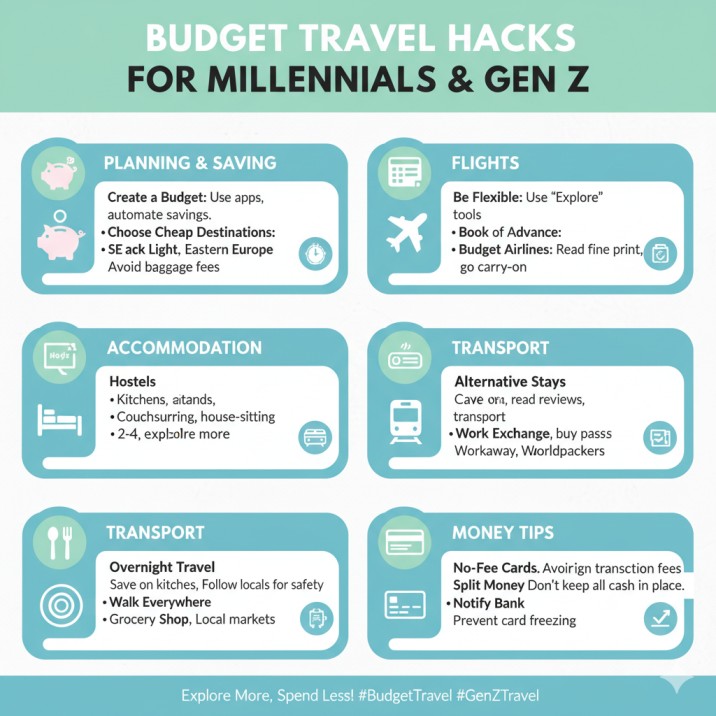
Look, let’s be real. You see those perfect travel feeds on Instagram and TikTok. You dream of seeing the world, from the chaotic markets of Marrakech to the serene beaches of Thailand. But then you check your bank account. That dream suddenly feels very, very far away.
As a fellow traveler who started with nothing but a backpack and a serious case of wanderlust, I’m here to tell you it’s not. The game has changed. For Millennials and Gen Z, travel isn’t about luxury resorts (unless we can get them for free, more on that later). It’s about experiences, authenticity, and, most importantly, being smart with our money.
The old advice—”just save up”—doesn’t cut it anymore. We need practical, actionable hacks. This isn’t your parents’ travel guide. This is the ultimate playbook for seeing the world when you’re young and on a budget. We’re going to cover everything from finding mind-blowingly cheap flights to sleeping for free and eating like a king on a few dollars a day.
Ready? Let’s break the myth that travel is only for the rich.
The Flight Game—How to Find Cheap Flights When You’re Broke
Your flight is often the single biggest expense. Mastering the art of finding cheap airfare is the first and most important budget travel hack.
Think Like a Hacker: Mastering Flight Aggregators and Error Fares
First, stop searching for flights on just one website. You need an arsenal. My go-to trio is Skyscanner, Google Flights, and Momondo.
Here’s the advanced strategy:
- Google Flights “Explore” Map: If you don’t care where you go, only when, this is your best friend. Open Google Flights, put in your home airport, and for the destination, just type “Everywhere.” You can set your dates or just pick “Flexible Dates” (like “a weekend in November”). The map will light up with the cheapest places you can fly. You might find a $200 round-trip flight to Bogotá you never even considered.
- Skyscanner’s “Whole Month” Feature: If you know your destination (e.g., Lisbon) but are flexible on dates, search for the “Whole Month” or even “Cheapest Month.” You’ll instantly see that flying on a Tuesday instead of a Friday could save you $150.
- Error Fares: These are glitches in the airline’s system that list fares for way, way less than they should be. Websites like Secret Flying are dedicated to finding them. The catch? You have to book immediately before the airline fixes the mistake.
The “Shoulder Season” is Your New Peak Season
Everyone wants to go to Italy in July. That’s why it’s expensive and horribly crowded. The shoulder season—the months just before and after the peak season (like May/June and September/October for Europe)—is the sweet spot.
You get 80% of the good weather with 50% of the crowds and prices. This is one of the best budget travel tips for young adults: stop following the vacation calendar your school set for you. Traveling in October instead of August is a massive win.
The VPN and Incognito Mode Trick: Does it Actually Save Money?
You’ve probably heard this one: “Clear your cookies and use a VPN to book flights!” The idea is that airlines track your searches and raise prices.
Here’s my experience: Clearing your cookies (or using Incognito mode) is always a good idea. It can prevent prices from mysteriously “going up” just because you searched for the same flight five times.
The VPN (Virtual Private Network) trick is less of a guarantee, but it can work. By setting your VPN to a different country (especially a lower-income country or the airline’s home country), you can sometimes see a lower price. It’s not a magic bullet, but it takes 30 seconds to try and could save you $50. Why not?
How to Master the Carry-On Only Lifestyle to Avoid Baggage Fees
This hack alone has saved me thousands of dollars. Budget airlines like RyanAir, Spirit, and AirAsia make their money on fees. Their biggest fee? Checked bags.
Learning how to pack light in just a backpack is a non-negotiable skill.
- Get Packing Cubes: They compress your clothes and keep you organized.
- The 5-4-3-2-1 Rule: For a one-week trip, pack: 5 pairs of socks/underwear, 4 tops, 3 bottoms (jeans, shorts, etc.), 2 pairs of shoes (one on your feet, one in the bag), and 1 jacket.
- Solid Toiletries: A shampoo bar and solid toothpaste bar save space, last forever, and won’t get you flagged by airport security.
- Wear Your Bulky Stuff: Wear your one pair of jeans, your hoodie, and your hiking boots on the plane. You’ll look like a marshmallow, but it’s free.
Sleep for Cheap: Finding Accommodation That Doesn’t Eat Your Budget
After flights, accommodation is the next budget-killer. But in 2025, there are countless cheap accommodation options for young adults that are safer and better than ever.
The Modern Hostel Guide: It’s Not Just a Grimy Bunk Bed
If you’re Gen Z and the word “hostel” freaks you out (thanks, horror movies), you need to update your info. Modern hostels are amazing. They are social hubs designed for people like us.
- They’re More Than Beds: Many have co-working spaces, awesome bars, rooftop pools, and free walking tours. You’re not just paying for a bed; you’re paying for an instant community.
- Safety is Key: Almost all reputable hostels have female-only dorms, 24/7 reception, and secure personal lockers for your bag. Read the reviews on Hostelworld—if it has thousands of reviews and a 9.0+ rating, it’s safe.
- Find Free Food: This is a classic hack to save money on food while traveling. Most hostels offer a free (though basic) breakfast. More importantly, check the “free food” shelf in the communal kitchen. Travelers leaving that day ditch their leftover pasta, olive oil, and snacks.
How to Find Safe and Free Accommodation with Couchsurfing
Yes, Couchsurfing is still a thing, and it’s one of the best ways to get a 100% free place to stay. It’s a community based on trust where locals offer you their spare room or… well, their couch.
But you have to be smart about it. Safety is the #1 priority.
- Only Stay with Hosts with Vouched-For, Positive Reviews: Read them carefully. Look for reviews from people who look like you (e.g., other solo female travelers).
- Have a Backup Plan: Always have the address and info for a nearby hostel. If you show up and feel even 1% unsafe, leave. No free bed is worth your safety.
- It’s a Cultural Exchange, Not a Free Hotel: Your host is not your servant. The “payment” is your time. Plan to hang out with them, share a meal, or bring a small gift from your home country.
The Ultimate Hack: How to House-Sit for Free Luxury Accommodation
This is my favorite long-term travel hack. House-sitting is a direct exchange: you watch someone’s home (and usually their pets) while they go on vacation, and you get to stay in their entire house for free.
I’ve stayed in luxury apartments in London and beach houses in Costa Rica for weeks at a time, for $0.
The best platform for this is TrustedHousesitters. It has a yearly membership fee, but you make that back in one night of not paying for a hotel. Build a strong profile with a background check and good references, and you’ll be set.
Are Work Exchange Programs Like Workaway Worth It?
If you have more time than money, a work exchange is a perfect long-term travel budget solution.
Platforms like Workaway and Worldpackers connect you with hosts (farms, hostels, families, NGOs) all over the world. You typically “work” for 20-25 hours a week in exchange for a free bed and (usually) food.
This isn’t just a budget hack; it’s a way to live like a local. You could be helping at a surf school in Portugal, teaching English at a homestay in Vietnam, or working reception at a hostel in Colombia. It’s an incredible way to gain skills and make deep connections.
Eat Like a King on a Pauper’s Budget (Without Getting Sick)
Food is one of the best parts of travel, but it can destroy your daily budget. The “I’m on vacation!” mindset can make you spend $20 on a mediocre tourist-trap pasta. Don’t do it.
The 5-Block Rule: How to Avoid Tourist Trap Restaurants
This is a simple rule I live by. If you are within 5 blocks of a major tourist attraction (like the Eiffel Tower or the Colosseum), do not eat there.
The restaurants are almost guaranteed to be overpriced and low-quality. They don’t need repeat customers, so they don’t have to be good.
Walk 10 minutes in any direction. Find a little side street. Look for the place that has no English menu, or a simple, handwritten one. That’s where you’ll find the delicious, authentic, and cheap local food.
Your New Best Friend: The Local Grocery Store
The single best way to save money on food while traveling is to stop eating out for every meal.
My first stop in any new city is a local grocery store.
- Breakfast: Buy a bag of oats or some yogurt and fruit.
- Lunch: Grab a fresh baguette, some local cheese, and salami. You now have a perfect, delicious picnic you can eat in a park for under $5.
- Booze: A bottle of wine from a shop is 1/5th the price of a single glass at a bar. “Pre-gaming” in your hostel is a classic money-saver.
Street Food Safety Tips You Actually Need to Know
Street food is cheap, fast, and often the best food in the country. But many young travelers are (rightfully) scared of getting sick.
Here’s how to eat street food safely:
- Go Where the Locals Go: Look for the stall with the longest line, especially if it’s full of locals, families, and office workers. They know what’s good and what’s clean.
- Watch Them Cook It: Make sure the food is cooked fresh and hot right in front of you. A high-heat wok or a boiling pot of soup kills everything.
- Avoid Pre-Cut Fruit and Ice: Be wary of fruit that was cut hours ago and is sitting out. In many countries, the tap water (and the ice made from it) is not safe to drink. Stick to bottled drinks or ask for “no ice.”
- Wash Your Own Hands: The food might be clean, but your hands aren’t. Carry a small bottle of hand sanitizer.
Why Cooking in Your Hostel is the Smartest Travel Hack
This combines all the best hacks. By staying in a hostel with a kitchen, you can buy ingredients from the local market and cook your own meals.
Even better? Make it social. “I’m making a big pot of pasta, anyone want in for $3?” You’ve just made 10 new friends and fed yourself for the price of a coffee. This is how you build a community on the road.
Getting Around: Transportation Hacks That Save Hundreds
You’ve made it to your destination, but how do you get from A to B without blowing your budget on taxis and Ubers?
Navigating Public Transport Like a Local (Even in a Foreign Language)
Taxis are a budget-killer. Your first move in any city should be to figure out the public transport system. It’s cheaper, more eco-friendly, and a real local experience.
- Download Offline Maps: In the Google Maps app, you can download an entire city’s map to use offline. It will still give you public transit directions (bus, metro) without using any data.
- Look for Multi-Day Passes: Most big cities (London, Paris, Tokyo) offer 3-day or 7-day tourist passes. If you plan on moving around a lot, these can offer huge savings.
- The “Walk ‘Til You Drop” Method: Millennials and Gen Z are all about walkable cities. The best way to see a city is on foot. It’s free, it’s good exercise, and you’ll discover hidden gems you’d miss from a bus window.
The Rise of Budget Buses: Your Secret Weapon in Europe and Asia
Forget expensive “scenic” trains (unless that’s the main experience). For getting between countries, budget buses are the undisputed king.
In Europe, services like FlixBus can take you from Berlin to Prague for $20. In Southeast Asia and South America, luxury overnight buses are a local staple. You get a fully reclining seat and save on a night’s accommodation. It’s a 2-for-1 hack.
Renting Bikes and Scooters: The Good, The Bad, and The Risky
In many cities (especially in Southeast Asia), renting a scooter for the day costs $5-$10 and gives you total freedom. It’s an amazing way to explore.
BUT. This is a serious one, guys.
- Get Travel Insurance: Always get travel insurance that covers you for motorsports. If you crash (and many people do), it can cost you tens of thousands in medical bills.
- Wear a Helmet: Don’t be an idiot.
- Have an International Driver’s Permit: If you get pulled over without one, you will have to pay a “fine” (bribe).
- Film the Bike First: Before you rent, take a video of the entire bike, pointing out every scratch and dent. This prevents the owner from blaming you for old damage when you return it.
Money, Tech, and Planning: The Boring Stuff That Saves Big
This is the “adulting” part of budget travel, but getting it right is crucial.
The Best Travel Cards for Millennials and Gen Z (No Foreign Transaction Fees!)
If you are still using your regular debit card abroad, you are throwing money away.
Most banks charge a 3% “foreign transaction fee” on every single purchase. That’s like paying a $3 fee for a $100 dinner. It adds up.
Before you leave, get a card designed for travel.
- Best for Credit: Look for any credit card with zero foreign transaction fees. Many travel-focused cards (like the Chase Sapphire Preferred, though it has an annual fee) offer this plus big sign-up bonuses that can pay for your first flight.
- Best for Debit: The Charles Schwab Investor Checking account is famous among travelers because it has no foreign transaction fees AND it refunds all your ATM fees worldwide. This is a total game-changer.
Essential Budget Travel Apps for Your Phone
Your phone is your most powerful travel tool. Here are the apps you need:
- Maps.me: An offline map app that is often more detailed than Google Maps for hiking trails and rural roads.
- Rome2Rio: Type in any two cities in the world (e.g., “Hanoi to Ho Chi Minh City”) and it will show you every possible way to get there (plane, train, bus, car) with estimated prices and times.
- XE Currency: A simple, offline currency converter.
- Google Translate: Download the language you need. The “camera” feature, which lets you point your phone at a menu and see it translated, feels like magic.
- WhatsApp: How the entire world communicates.
How to Use Student Discounts for Travel (Even if You’re Not a Student)
If you are a student, get an ISIC (International Student Identity Card). It’s the only globally recognized student ID and will get you discounts on everything from museum tickets to flights.
If you’re not a student but are under 26, you’re still in luck. Many attractions, especially in Europe, offer a “Youth” discount that’s separate from a “Student” discount. Always, always ask: “Do you have a discount for people under 26?”
Conclusion: It’s Not About Being Cheap, It’s About Being Smart
Traveling on a budget as a Millennial or Gen Z isn’t about skipping experiences. It’s about being intentional with your money so you can have more experiences.
It’s choosing a $5 street food feast over a $30 tourist-trap meal, so you have money left for a scuba diving trip. It’s staying in a $20-a-night hostel, not because you’re poor, but because you’ll meet people from 10 different countries.
The world is massive, and it’s more accessible than ever. You don’t need to be rich. You just need to be creative, flexible, and armed with the right hacks.
Now go book that flight.
Frequently Asked Questions (FAQ) About Budget Travel
1. What is the best way to travel cheap as a student?
The best way is to combine hacks. Travel in the shoulder season, use your Student/Youth ID for discounts, stay in hostels, cook your own food, and use public transport. A work exchange program (like Workaway) is also perfect for students, as you can travel for months on a summer break with almost zero accommodation or food costs.
2. How much money do I actually need for a 3-month backpacking trip?
This depends entirely on the region.
- Southeast Asia (Thailand, Vietnam, Cambodia): You can live well on $30-$40 USD per day.
- South America (Peru, Bolivia, Colombia): Very similar, around $40-$50 USD per day.
- Western Europe (France, Italy, UK): This is much more expensive. You should budget $70-$100 USD per day, and that’s with staying in hostels and cooking.
3. Is solo travel safe for young adults, especially women?
Yes, but safety is an active practice. Millions of people (including many solo women) travel the world safely every year. The key is to do your research, read hostel reviews carefully (look for “female-only dorms”), don’t walk alone at night in sketchy areas, don’t flash expensive items, and trust your gut.
4. What’s the best way to meet other young travelers?
Stay in hostels. That’s it. That’s the whole answer. The entire system is designed for you to meet people. Join the free walking tour, sign up for the hostel’s “family dinner,” or just hang out in the common room. You’ll have travel buddies in hours.
5. Is travel insurance really necessary for a short trip?
YES. 100%. If you can’t afford travel insurance, you can’t afford to travel. A simple broken ankle in the USA can cost $20,000. A medical emergency in another country can be financially life-ruining. Get. The. Insurance.
6. How do I avoid foreign transaction fees on my cards?
Before you leave, apply for a credit card that explicitly advertises “No Foreign Transaction Fees.” For a debit card, get an account from a bank like Charles Schwab, which not only has no fees but also refunds your ATM fees from other banks.
7. How can I save money on food while traveling if I have dietary restrictions?
This is a great question. If you have an allergy or restriction (vegan, gluten-free), staying in an Airbnb or hostel with a kitchen is your best bet. This gives you full control over your meals. Also, learn how to say your restriction in the local language (e.g., “No fish sauce,” “I am vegan”) and write it on a card you can show to waiters.
8. What’s the cheapest way to get around Europe?
By bus. Services like FlixBus and Eurolines are significantly cheaper than trains. Booking in advance is key. For travel within a single country, regional buses are almost always the cheapest (and most local) option.
9. Are overnight buses and trains a good way to save money?
They are one of the best 2-for-1 hacks. You cover a long distance while you sleep, which means you don’t have to pay for a night’s accommodation. Just make sure to bring an eye mask, earplugs, and keep your valuables (passport, phone) in a secure place on your body, not in your bag.
10. How do I pack for a long-term trip in just a carry-on?
The key is merino wool. Clothes made from merino wool are anti-bacterial (you can wear them 5+ times without them smelling), they dry fast, and they keep you warm when it’s cold and cool when it’s hot. They’re expensive, but 2-3 merino t-shirts replace 10 cotton ones. Other than that, pack layers, not bulk, and plan to do laundry once a week.
11. What are the best cheap travel destinations for millennials and Gen Z?
For the ultimate budget experience, you can’t beat:
- Southeast Asia: Vietnam, Thailand, Cambodia, Laos.
- Eastern Europe: Poland, Hungary, Czechia, Albania.
- Latin America: Bolivia, Colombia, Guatemala, Mexico.
12. How do I find free things to do in an expensive city?
Every city has free activities. Search for “free things to do in [City].” You’ll find:
- Free walking tours (just tip your guide).
- Free museum days (e.g., in Paris, many museums are free on the first Sunday of the month).
- Hiking to viewpoints.
- Hanging out in public parks.
- Exploring different neighborhoods on foot.