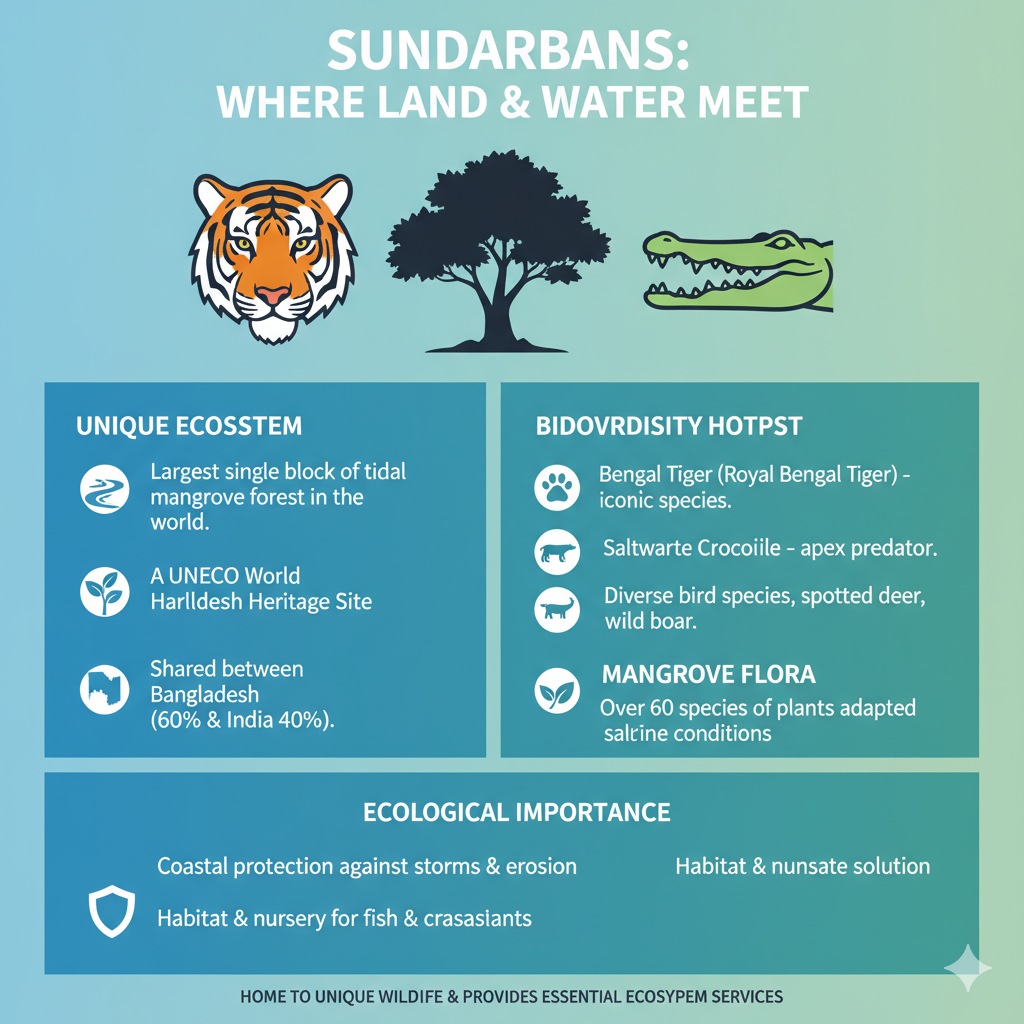
Step into a world where the land and water are locked in a timeless embrace, a tangled labyrinth of emerald mangroves, whispering tidal creeks, and the silent, watchful gaze of the Royal Bengal Tiger. This is the Sundarbans, the world’s largest single block of tidal halophytic mangrove forest, a UNESCO World Heritage Site shared by Bangladesh and India. But its significance stretches far beyond its ecological marvels. The Sundarbans mangrove ecosystem is a critical lifeline, a formidable guardian, and a vibrant cultural heartland for millions.
This ultimate guide explores the multifaceted impact of the Sundarbans on the economy, climate, natural disasters, tourism, culture, history, conflict, animals, foods, fishing, and provides a detailed travel guide for both Bangladesh and India.
★ The Economic Engine of the Coast: How the Sundarbans Fuel Livelihoods
The Sundarbans’ impact on Bangladesh economy and the role of Sundarbans in India’s economy cannot be overstated. This tidal forest is a powerhouse of natural resources, providing direct and indirect sustenance to over 4 million people.
★ Sundarbans Forest Products Impact on Industry and Local Life
The economic value of Sundarbans mangrove timber, though now heavily regulated for conservation, has historically been a key resource. More important today are the non-timber products. The economic importance of Sundarbans non-timber products is vast. Communities rely on collecting Golpata (Nipa palm leaves) for thatching roofs, reeds for matting, and medicinal plants. The Sundarbans forest products and their uses are deeply integrated into the daily life and commerce of the region. This intricate web of resource collection forms a significant part of the role of Sundarbans in Bangladesh coastal economy.
★ The Golden Flow: Sundarbans Honey Harvesting and Economy
One of the most celebrated economic activities is the Sundarbans honey harvesting and economy. For generations, traditional honey collectors, known as Mawals, have braved the dangers of the forest to collect the prized, dark, and raw mangrove honey. The economic impact of Sundarbans honey production is substantial, providing a crucial seasonal income for thousands and supporting a thriving ancillary industry.
★ Mangrove Conservation Sundarbans Economic Effects
Conservation is not just an environmental issue; it’s an economic one. Efforts like mangrove restoration projects Sundarbans Bangladesh have direct economic benefits. A healthier forest means a more robust fish population, better storm protection for coastal industries, and a more attractive destination for tourism, proving that conservation and economic prosperity can go hand-in-hand. The Sundarbans natural resource economic contributions are a clear testament to the value of preserving this unique habitat.
★ The Living Shield: Guardian Against Climate Change and Natural Disasters
The Sundarbans’ most critical role is perhaps its function as a natural barrier, a frontline defense for millions living in the low-lying coastal regions of Bangladesh and India.
★ How Sundarbans Protect From Natural Disasters
When cyclones roar in from the Bay of Bengal, the dense mangrove forest acts as a gigantic natural shield. Its intricate network of roots and trunks absorbs the initial shock of tidal waves and dissipates their energy. This role as a Sundarbans storm barrier in Bangladesh and West Bengal has saved countless lives and prevented billions of dollars in property damage. The Sundarbans storm surge protection Bangladesh offers is a priceless ecosystem service. The forest’s effectiveness in Sundarbans storm and flood control makes it the single most important defense mechanism for the entire coastal belt. Following a disaster, Sundarbans natural disaster recovery programs are crucial for helping communities rebuild.
★ The Climate Change Equation: Carbon Sinks and Rising Tides
The Sundarbans effect on coastal climate change is twofold. Firstly, it is a vital tool for mitigation. The role of Sundarbans in carbon sequestration is immense; its soil and biomass lock away vast amounts of carbon, helping to combat global warming.
Secondly, the region is highly vulnerable. The climate change vulnerability Sundarbans region is one of the highest in the world due to sea-level rise, increasing salinity, and more frequent, intense storms. This directly affects the ecosystem and the people who depend on it. Climate adaptation strategies Sundarbans fishermen and farmers are adopting are critical for their survival, but the challenges are immense. The climate change impact on Sundarbans fisheries and wildlife is already being felt, making climate resilience measures Sundarbans communities a top priority.
★ A Journey into the Wild Heart: Sundarbans Tourism Uncovered
Tourism in the Sundarbans is a delicate dance between showcasing its wild beauty and preserving its fragile ecosystem. For adventurers and nature lovers, it offers an unparalleled experience.
★ Sundarbans Mangrove Forest Tourism Guide: What to Expect
A trip to the Sundarbans is a journey by boat. You’ll navigate through a maze of creeks and rivers, your eyes scanning the muddy banks for a glimpse of a tiger or a basking crocodile. The Sundarbans biodiversity hotspot tourism guide promises sightings of spotted deer, wild boars, monkeys, and a dazzling array of birdlife. A well-planned trip is essential, making a best travel guide to Sundarbans tiger reserve an invaluable resource.
★ Sustainable Tourism in Sundarbans Area: Balancing Profit and Preservation
The Sundarbans tourism impact on local economy is significant, creating jobs for boatmen, guides, and lodge owners. However, the tourism development challenges in Sundarbans are real, including waste management and minimizing disturbance to wildlife. The future lies in eco-friendly travel Sundarbans mangrove forest, where community involvement in Sundarbans tourism ensures that benefits are shared and locals become stewards of their environment. Adhering to Sundarbans eco-tourism sustainable practices is not just a choice but a necessity.
★ Echoes of the Past: The Rich History and Culture of the Sundarbans
The Sundarbans is not just a forest; it’s a cultural landscape steeped in history, folklore, and unique traditions that have evolved from humanity’s complex relationship with this formidable environment.
★ The Cultural Significance of Sundarbans in Bengal
The cultural impact of Sundarbans on Bengal society is profound. The forest is the backdrop for countless stories, songs, and plays. The most powerful cultural element is the worship of Bonbibi, the guardian spirit of the forest, who is revered by both Hindus and Muslims. This syncretic faith system is a beautiful example of the Sundarbans cultural identity in Bengal region. The cultural heritage preservation efforts are vital to maintaining these unique traditions.
★ History of Sundarbans Mangrove Ecosystem: A Timeline of Change
The history of Sundarbans mangrove ecosystem dates back thousands of years. There is evidence of historical settlements near Sundarbans Bangladesh from the Mauryan period (4th to 2nd century BCE). The history of Sundarbans trade and commerce reveals its importance as a source of timber, salt, and other resources for centuries. Unfortunately, the history of Sundarbans mangrove deforestation is also part of its story, though significant conservation efforts are now in place, stemming from a long history of Sundarbans conservation initiatives.
★ The Shared Forest: Navigating Conflicts and Cooperation
As a transboundary ecosystem, the Sundarbans presents unique challenges and opportunities for cooperation between Bangladesh and India.
★ Conflicts Over Sundarbans Border Area India Bangladesh
The shared border running through the Sundarbans has been a source of tension. The causes of conflict in Sundarbans border area often revolve around resource allocation. Conflict over fishing rights Sundarbans region is a common issue, as are instances of illegal poaching and smuggling. These cross-border environmental conflicts Sundarbans require continuous dialogue and joint management strategies.
★ Bridging the Divide: From Conflict to Conservation
Despite the challenges, there is a growing recognition that the Sundarbans can only be protected through collaboration. India Bangladesh cooperation on Sundarbans conservation has led to joint tiger census projects and anti-poaching initiatives. Resolving the Sundarbans conflict resolution between India and Bangladesh is key to the long-term health of the ecosystem and the security of the people who call it home. A major internal struggle is the conflict between conservation and local livelihood Sundarbans, where strict protection rules can impact the ability of communities to survive, highlighting the need for sustainable livelihood alternatives.
★ A Sanctuary of Life: The Incredible Animals of the Sundarbans
The Sundarbans is a biodiversity hotspot, home to a spectacular array of fauna adapted to the unique challenges of a mangrove environment.
★ The Royal Bengal Tiger: King of the Mangroves
The Sundarbans is the only mangrove forest in the world inhabited by royal bengal tigers. The Sundarbans Bengal tiger population status is a key indicator of the ecosystem’s health. These tigers are unique—adept swimmers with a diet that includes fish and crabs. Observing one is the ultimate prize for any visitor.
★ Wildlife in Sundarbans Mangrove Forest India Bangladesh: Beyond the Tiger
While the tiger is the star, the Sundarbans National Park biodiversity is astounding. It is home to saltwater crocodiles, fishing cats, spotted deer, rhesus macaques, and the elusive Irawaddy dolphin. The traditional animals found in Sundarbans mangroves have all developed special adaptations to survive in this saline, tidal environment. The forest is also a paradise for birdwatchers, with a comprehensive Sundarbans rare bird species guide being a must-have for any enthusiast.
★ Endangered Animals in Sundarbans Region: A Call for Protection
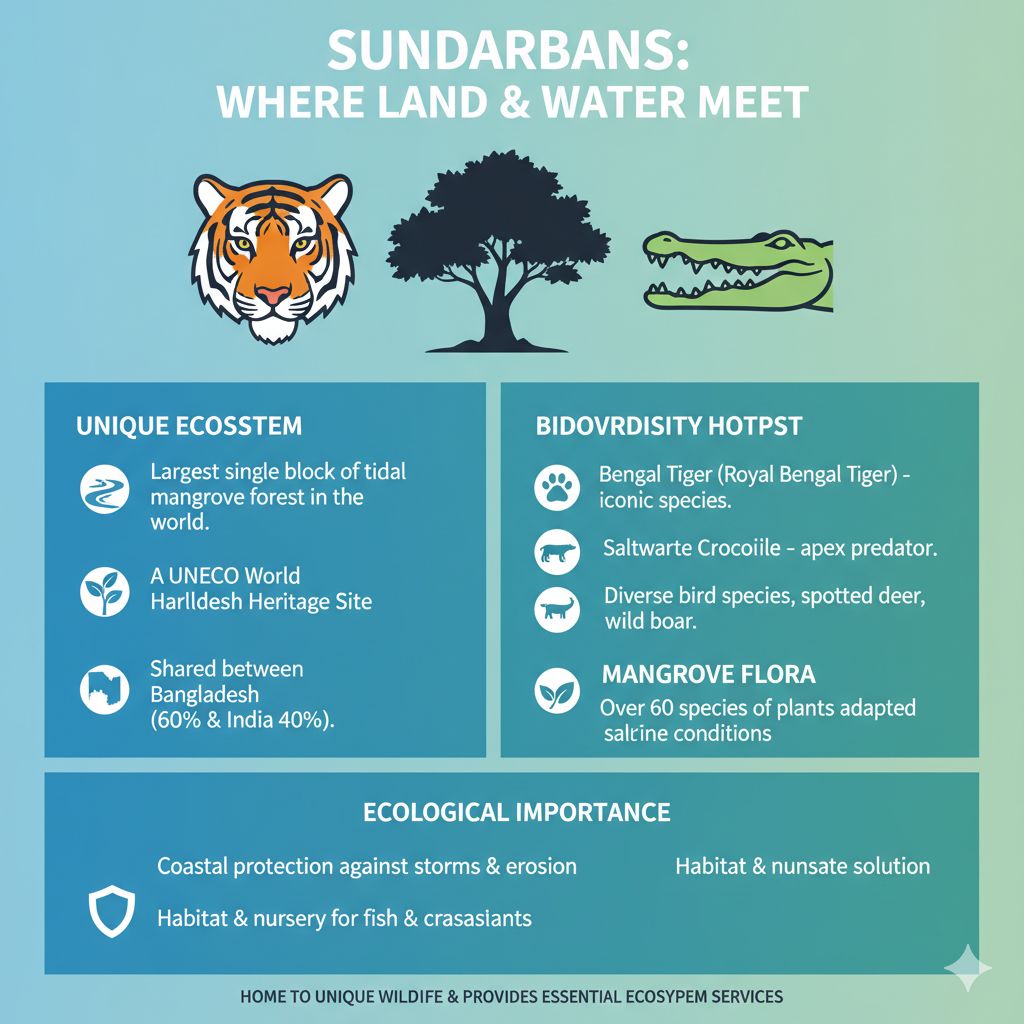
Many species here are under threat. The conservation status of Sundarbans animal species is a serious concern. The Sundarbans animal species endangered list includes the Bengal tiger, saltwater crocodile, river terrapin, and several species of kingfisher. Protecting these rare animals spotted in Sundarbans forest is a global responsibility.
★ A Taste of the Tides: The Unique Foods and Fishing Culture
The life and culture of the Sundarbans are inextricably linked to its waters. The fishing industry and the local cuisine are a direct reflection of the forest’s bounty.
★ Fishing Community Livelihood Sundarbans Bangladesh
For countless families, fishing is the only way of life. The fishing economy in Sundarbans coastal areas is a cornerstone of the regional economy. Fishermen use traditional fishing gear used in Sundarbans mangrove waters to navigate the complex channels. Their livelihood is precarious, threatened by overfishing, climate change, and the ever-present danger of tiger and crocodile attacks. The impact of Sundarbans on fish population Bangladesh is enormous, as the mangrove roots serve as crucial nursery grounds for countless fish and shrimp species.
★ Sundarbans Traditional Cuisine: Recipes from the Mangroves
The local Sundarbans food culture and tradition are centered around fresh catches. Popular Sundarbans dishes from local fishing villages often feature crab, prawns, and a variety of fish like Bhetki and Hilsa, cooked with locally sourced ingredients. Sundarbans recipes with fish and seafood are known for their rustic, bold flavors. Key traditional Sundarbans food ingredients include fresh coconut, mustard oil, and local spices. Learning about traditional Sundarbans food harvesting methods provides a fascinating insight into the resourcefulness of the local people.
★ Your Ultimate Sundarbans Travel Guide: Plan Your Adventure
Ready to explore this magical world? Here’s a practical guide to planning your trip.
★ How to Visit Sundarbans Wildlife Sanctuary
The main entry points are Khulna in Bangladesh and Godkhali (via Canning) in India. The only way to explore is via organized boat tours, which can range from basic day trips to multi-night luxury cruises. It’s best to book through a reputable tour operator who understands the fishing villages in Sundarbans travel guide and can provide experienced naturalists.
★ Best Time to Visit Sundarbans for Wildlife Sighting
The best time to visit is during the cooler, drier months from October to March. During this period, the chances of spotting animals, including the tiger, are higher as they come to the riverbanks to drink water and sunbathe.
★ Sundarbans Travel Safety Tips
- Always stay with your guide and follow their instructions.
- Never disembark from the boat unless in a designated, protected area.
- Do not swim in the rivers.
- Carry insect repellent, sunscreen, a hat, and basic first-aid supplies.
- Sundarbans wildlife and nature photography tips: Use a long lens (300mm or more), be patient, and keep your camera ready at all times.
★ Frequently Asked Questions (FAQ)
- How do the Sundarbans act as a storm mitigation economic benefit?
By absorbing the impact of cyclones, the Sundarbans prevent catastrophic damage to infrastructure, agriculture, and industries in coastal cities, saving billions of dollars in recovery costs and ensuring economic stability. - What is the historical significance of the Sundarbans?
The region has a rich history with evidence of ancient settlements. The history of Sundarbans fishing culture and its role in trade routes dates back centuries, making it a place of deep historical and cultural importance. - What are the main issues in the India Bangladesh Sundarbans border conflict?
The primary issues are cross-border poaching, illegal fishing, and disputes over resource access in the unmarked tidal rivers, which require constant diplomatic engagement and joint patrolling. - Are there any cultural festivals unique to the Sundarbans?
Yes, the most famous is the Bonbibi Jatra, a folk theatre performance that celebrates the victory of the forest goddess over the demon king, held annually before the honey collection and fishing seasons begin. - What are some animals unique to the Sundarbans ecosystem?
While not all are exclusive, species like the fishing cat, saltwater crocodile, and certain kingfisher species have unique adaptations to this mangrove environment. The Sundarbans tiger is genetically distinct from other tiger populations. - How does climate change impact Sundarbans wildlife?
Sea-level rise reduces the land area, while increased salinity affects the vegetation that herbivores like spotted deer rely on, impacting the entire food chain, including the tiger. - What are the fishing regulations in Sundarbans Bangladesh India?
Both countries have regulations that include permit systems, bans on fishing in core conservation zones, and restrictions on the mesh size of nets to protect juvenile fish. - What is the economic importance of the Sundarbans mangrove forest?
It provides timber, honey, fish, and tannins, supports a thriving tourism industry, and offers invaluable ecosystem services like storm protection and carbon storage, making its economic importance immense. You can explore more about its global significance on the UNESCO World Heritage Centre website. - What are some traditional foods from the Sundarbans region?
Iconic dishes include crab curry (Kankrar Jhal), prawn curry with coconut (Chingri Malai Curry), and various preparations of local fish like Bhetki and Parshe, often cooked in a spicy mustard gravy. - What is the current status of the Sundarbans Bengal tiger?
According to recent census data, the population is stable or slightly increasing in both Bangladesh and India due to strong conservation efforts, though they remain endangered. For more information on tiger conservation, visit the World Wildlife Fund (WWF). - How can tourism be more sustainable in the Sundarbans?
By enforcing strict waste management policies (“carry-in, carry-out”), using quieter, low-emission boats, promoting homestays to benefit local communities directly, and educating tourists about conservation. - What are the mangrove forest ecosystem services of the Sundarbans?
Beyond storm protection and carbon sequestration, they include water purification, acting as a nursery for 90% of local marine species, providing raw materials, and supporting cultural and spiritual well-being.