Have you ever experienced the sticker shock of a home renovation quote? Or watched a desperately needed new road or bridge project drag on for months, even years, past its deadline? Behind the eye-watering invoices and frustrating delays, there’s a powerful, often invisible, economic force at play: a severe and deepening shortage of skilled trade labor in America.
We are facing a crisis in the construction industry. There is a widening gap between the demand for skilled electricians, plumbers, welders, and carpenters, and the number of qualified workers available to fill these essential roles. This isn’t just a problem for construction companies; it’s a problem for everyone. This labor deficit is a primary driver of inflation for everything from the cost of a new home to the budget for our nation’s critical infrastructure.
This deep-dive analysis will explore the complex reasons behind the deficit of skilled tradespeople and unpack exactly how this labor shortage directly inflates costs for housing, commercial development, and public works projects. More importantly, we will look at the viable solutions that can help us rebuild the workforce pipeline and ensure a more affordable and efficient future.
The Vanishing Tradesman: Diagnosing the Skilled Labor Shortage in Construction
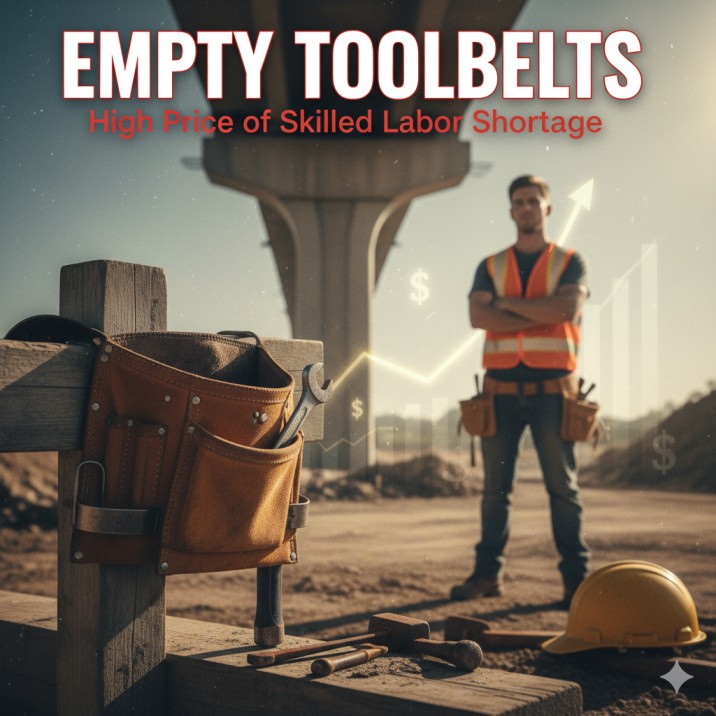
The empty toolbelt has become a symbol of a multi-generational problem. The current labor gap isn’t the result of a single issue but a convergence of powerful demographic and cultural shifts that have been building for decades.
A Look at the Staggering Statistics Behind the Skilled Labor Gap
The numbers are stark. According to a recent analysis by the Associated Builders and Contractors (ABC), the construction industry needs to attract an estimated half a million new workers on top of the normal pace of hiring just to meet demand.
This isn’t a future problem; it’s happening right now. For every five craft professionals who retire from the industry, only one new one is entering. This creates a massive experience vacuum and a fierce competition for the few qualified workers who remain, allowing them to command premium wages and giving contractors no choice but to pass those costs on.
The “Silver Tsunami”: Why the Retirement of Baby Boomer Tradesmen is a Major Problem
For decades, the construction industry was built on the backs of the Baby Boomer generation. These highly skilled, experienced electricians, plumbers, and master carpenters are now retiring in droves. This “Silver Tsunami” is draining the industry of its most knowledgeable and productive workers.
The problem is twofold. First, there simply aren’t enough younger workers to take their places. Second, the invaluable tribal knowledge and mentorship that these veterans provided on the job site is being lost forever. A freshly graduated apprentice doesn’t have the same problem-solving skills or efficiency as someone with 30 years of experience, and this productivity gap has a real cost.
The Cultural Shift: How a “College-for-All” Mindset Devalued Vocational Careers
For the past 30 to 40 years, a powerful cultural narrative has been pushed on young people and their parents: the only pathway to a successful life and a good career is a four-year college degree. This well-intentioned but misguided “college-for-all” movement has had a devastating, unintended consequence.
It created a stigma around blue-collar work and vocational careers. High school guidance counselors, parents, and society at large began to see working with your hands as a lesser path, a “backup plan” for those who couldn’t make it to university. This cultural bias has steered millions of bright, capable young people away from stable, high-paying, and essential careers in the skilled trades.
Reasons for the Decline in High School Vocational Training Programs
As the “college-for-all” mindset took hold, high school budgets and priorities shifted. Shop classes, vocational-technical (vo-tech) tracks, and hands-on learning programs were dismantled across the country.
- Budget Cuts: Expensive programs like welding and automotive repair were often the first to be cut when school districts faced financial pressure.
- Focus on Standardized Testing: The emphasis on preparing students for college entrance exams left little room in the curriculum for vocational education.
- Lack of Qualified Instructors: Many experienced tradespeople could earn far more working in the industry than they could as a high school teacher.
This dismantling of the educational pipeline has been catastrophic. We stopped introducing young people to the possibility of a career in the trades, effectively cutting off the supply of new talent at its source.
The Ripple Effect: How the Skilled Labor Deficit Inflates Construction Costs
The connection between the labor shortage and rising costs is direct and undeniable. It’s a classic case of supply and demand, and it impacts every phase of a construction project.
The Direct Link Between Labor Supply and Construction Project Bids
When a construction company prepares a bid for a new project, the largest and most volatile component of that bid is labor. When skilled labor is scarce, several things happen:
- Higher Wages: Companies must pay a premium to attract and retain the skilled workers they need. These higher hourly rates are passed directly into the project budget.
- Increased Overtime: To meet deadlines with a smaller crew, contractors are forced to schedule more overtime hours, which are paid at time-and-a-half or double-time, further inflating labor costs.
- Recruiting Costs: Companies spend more on recruitment agencies and signing bonuses to find qualified candidates.
- Risk Premium: Contractors add a contingency or “risk premium” to their bids to account for the possibility of labor-related delays.
All of these factors mean that from the moment a project is conceived, its budget is already inflated by the underlying labor shortage.
How the Nationwide Electrician Shortage Impacts Building Timelines and Budgets
Modern buildings are more technologically complex than ever before. They require highly skilled electricians to install complex wiring, data networks, fire alarm systems, and energy-efficient lighting. The shortage of qualified electricians is a major bottleneck. A project can be on schedule, with framing and drywall up, but if the electrical contractor can’t get enough licensed electricians to the site, the entire project grinds to a halt. These delays have a cascading effect, causing costly penalties and pushing back the completion date, which adds significant financing costs to the developer’s budget.
The Effect of the Plumber and HVAC Technician Deficit on New Housing Prices
Just like electricians, qualified plumbers and HVAC technicians are essential for any residential construction. The deficit of these mechanical trades directly impacts the cost of building a new home. When a homebuilder can’t find a plumbing subcontractor with an available crew, they face delays that hold up the entire construction process. Furthermore, the plumbing and HVAC companies themselves must charge more to cover the high wages they are paying their in-demand technicians. This cost is baked directly into the final sale price of the home, contributing to the broader housing affordability crisis.
Analyzing How the Skilled Welder Shortage Increases Infrastructure Project Costs
For large-scale infrastructure projects—bridges, power plants, and high-rise buildings—skilled welders are indispensable. The structural integrity of these massive projects depends on the quality of their work. The shortage of certified structural welders is a critical problem. It not only increases the labor cost component of these multi-billion-dollar projects but can also create safety and quality control issues if less-qualified workers are used. This makes infrastructure development more expensive for taxpayers and can delay the maintenance and upgrading of our nation’s vital systems.
Building a New Foundation: Long-Term Solutions for the Skilled Labor Shortage
Diagnosing the problem is the easy part. Solving this decades-in-the-making crisis requires a concerted, multi-pronged effort from industry leaders, educators, and policymakers.
The Vital Role of Modern Apprenticeship Programs in Closing the Skills Gap
Apprenticeship programs are the time-tested model for training the next generation of craft professionals. “Earn while you learn” programs, often run by trade unions and industry associations, allow aspiring tradespeople to receive a salary and benefits while getting on-the-job training from experienced mentors, supplemented by classroom instruction.
Expanding and modernizing these registered apprenticeship programs is the single most effective way to close the skills gap. They provide a clear, debt-free path to a lucrative career. For more information on career paths and earning potential in the trades, the U.S. Bureau of Labor Statistics’ Occupational Outlook Handbook is an excellent resource.
How to Attract Gen Z to High-Paying Careers in the Skilled Trades
The stereotypes of trade jobs being “dirty” or “low-tech” are woefully outdated. To attract the next generation, the industry needs to rebrand and highlight the modern realities of these careers:
- High Earning Potential: Many skilled tradespeople earn six-figure salaries without a dollar of student loan debt.
- Embracing Technology: Modern construction sites use drones, robotics, GPS-guided equipment, and virtual reality. These are high-tech jobs.
- Entrepreneurship: The trades offer a clear path to starting your own business and being your own boss.
- Purpose-Driven Work: Tradespeople build the world around us. There is immense satisfaction in creating something tangible that serves the community.
Rebuilding the Pipeline: The Push to Restore Vocational Education in Schools
We must reverse the decline of vocational education. This means reinvesting in shop classes and vo-tech programs at the high school level. It means creating clear pathways and partnerships between schools, community colleges, and local apprenticeship programs. Organizations like SkillsUSA are at the forefront of this movement, working to empower students to pursue careers in skilled trades and technology. By reintroducing young people to these careers early on, we can reignite the talent pipeline.
Frequently Asked Questions (FAQ)
1. Why is there a shortage of skilled trade workers in 2025?
The shortage is caused by a perfect storm of factors: a large wave of Baby Boomer retirements, a cultural and educational shift that has steered young people towards four-year degrees, and the dismantling of many high school vocational programs.
2. How does the labor shortage directly increase construction costs?
It increases costs through higher wages, more overtime pay, increased recruitment expenses, and project delays. Contractors must pay more to attract scarce labor, and they pass these costs on in their project bids.
3. Which skilled trades are most in demand right now?
While the shortage is widespread, there is an especially critical demand for electricians, plumbers, HVAC technicians, welders, and carpenters.
4. Does the skilled trade shortage affect home prices for buyers?
Yes, absolutely. The increased labor cost to build a new home is a significant factor in its final sale price. It also makes renovations and repairs on existing homes more expensive.
5. What is the “Silver Tsunami” in the construction industry?
This term refers to the massive wave of highly experienced Baby Boomer tradespeople who are now reaching retirement age, creating a huge deficit of skill and experience in the workforce.
6. How can we encourage more young people to enter the skilled trades?
We need to change the cultural perception of these jobs, highlight the high earning potential and technological aspects, and restore vocational training and apprenticeship pathways as respected, mainstream educational options.
7. Are careers in the skilled trades a good alternative to a four-year college degree?
For many people, they are an excellent alternative. They offer the ability to earn a high salary without incurring student loan debt, provide strong job security, and offer clear paths to entrepreneurship.
8. What is an apprenticeship and how does it help solve the labor shortage?
An apprenticeship is an “earn while you learn” training model that combines paid on-the-job training with classroom instruction. It is the most effective way to create a steady pipeline of new, highly skilled workers for the industry.
9. How did the “college-for-all” movement contribute to the problem?
By positioning a four-year degree as the only path to success, it created a stigma around vocational careers, causing students, parents, and schools to devalue and defund the very programs needed to train the next generation of tradespeople.
10. What is the long-term economic risk of not solving the skilled labor gap?
The long-term risks include chronically inflated housing costs, the inability to affordably maintain and upgrade critical infrastructure (roads, bridges, power grids), and slower overall economic growth.
11. Is technology making skilled trade jobs obsolete?
No, just the opposite. Technology is changing the nature of the work, making it safer, more precise, and more efficient. It is creating a demand for tech-savvy tradespeople who can work with drones, robotics, and advanced software.
12. What can parents and students do to learn more about careers in the trades?
They can reach out to local trade unions or industry associations (like the Associated Builders and Contractors or the National Electrical Contractors Association), explore community college technical programs, and look for local companies that offer internships or pre-apprenticeship opportunities.