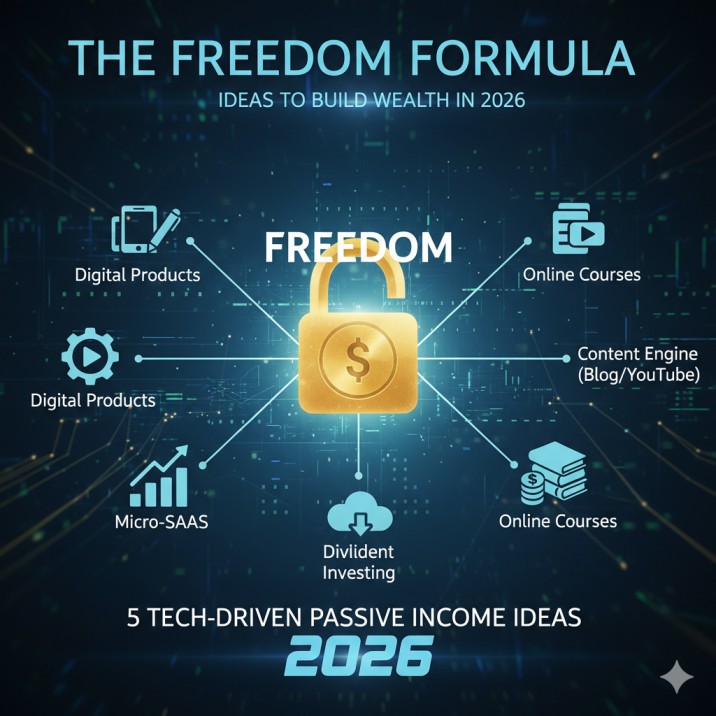
Most of us are taught a single formula for making money: trade your time for a paycheck. You work 40 hours a week, and you get paid for those 40 hours. This is the world of active income, the foundation of our economy. But what if there was another way? A way to build systems that earn money for you, even while you’re sleeping, traveling, or spending time with family?
This is the powerful promise of passive income. It’s not about getting rich quick or making money from nothing. It’s about a fundamental shift in mindset—from trading time for money to building assets that generate cash flow. In today’s digital age, technology has become the ultimate enabler, creating more opportunities than ever before to build these automated income streams.
This ultimate guide will break down the critical differences between passive income vs. active income, explaining why understanding this concept is the first step toward financial freedom. More importantly, we’ll dive deep into five specific, tech-driven passive income ideas that are poised to thrive in 2026 and beyond. Forget outdated advice; these are modern strategies for building real, sustainable wealth in our increasingly digital world.
Active Income vs. Passive Income: Understanding the Core Difference
Before we explore how to build it, we need a crystal-clear understanding of what passive income actually is—and what it isn’t. The line between these two concepts defines your entire approach to wealth creation.
What is Active Income? The Traditional Path
Active income is money you earn in direct exchange for performing a service or trading your time. It’s the most common way people earn a living. If you have to show up, log in, or actively work to get paid, you are earning an active income.
- Examples of active income sources include your salary from a 9-to-5 job, hourly wages, freelance consulting fees, or commissions from sales.
- The key characteristic: The moment you stop working, the money stops coming in. Your income is directly tied to your continued effort and the hours you put in.
While active income is essential for meeting immediate financial needs and providing stability, its biggest limitation is that it isn’t scalable. There are only 24 hours in a day, which puts a hard cap on your earning potential.
What is Passive Income? Building Your Money Machine
Passive income is money you earn from an asset you own or have created, which requires minimal ongoing effort to maintain. This is the crucial part: it involves significant upfront work—the “active” phase—to build the asset. But once that asset is built and launched, it continues to generate revenue on its own.
- Examples of passive income streams include rental income from property, dividends from stocks, royalties from a book or song, or, more relevant to our guide, revenue from a monetized blog, an online course, or a software application.
- The key characteristic: Your income is decoupled from your time. The system you built works for you 24/7, whether you are actively managing it or not.
The primary benefit of generating passive income is the freedom it provides. It offers financial security, flexibility, and the ability to scale your earnings beyond what’s possible with a traditional job. It’s about working smart to create systems, not just working hard for a paycheck.
5 Realistic Tech-Driven Passive Income Ideas for 2026
The internet and modern technology have blown the doors wide open for creating passive income. The initial work is still required, but the tools available today make it easier than ever to build, launch, and automate your income-generating assets. Here are five of the most promising ideas you can start working on today to reap the rewards in 2026.
1. Create and Sell a Niche Digital Product (The Evergreen Asset)
The digital product market is booming. Unlike physical products, there’s no inventory to manage, no shipping costs, and you can sell the same item an infinite number of times. The upfront work involves creating a high-quality product once, and the passive income comes from the automated sales that follow for months or even years.
How it Works:
You identify a specific problem that a niche audience has and create a digital product that solves it. This isn’t about writing a generic “how-to” guide. It’s about leveraging your unique knowledge to create something truly valuable.
Examples of Niche Digital Products:
- Ebooks: An in-depth guide on “Sustainable Gardening for Urban Balconies” or “A Beginner’s Guide to Crypto Staking.”
- Templates: A pack of customizable Canva templates for real estate agents, a set of Notion templates for freelance project management, or professional resume templates for tech jobs.
- Printables: Digital planners, budget trackers, workout logs, or kids’ educational worksheets.
- Software or Presets: Lightroom presets for photographers, simple plugins for WordPress, or a specialized spreadsheet for small business accounting.
The Action Plan to Get Started:
- Identify Your Niche: What skills or knowledge do you have? What problems do people in your network or online communities constantly complain about? Use tools like Google Trends or explore forums like Reddit and Quora to find pain points. The more specific your niche, the easier it is to market.
- Create the Product: This is the “active” work. Dedicate time to writing your ebook, designing your templates, or developing your presets. Focus on quality and value. Use user-friendly tools like Canva for design, Beacon.fm for ebook creation, or Notion for template building.
- Set Up Your Sales Platform: You need a place to sell your product. Platforms like Gumroad and Etsy are perfect for beginners. They handle payment processing and digital delivery for a small fee. You simply upload your product, set a price, and write a compelling description.
- Market Your Product (Initial Push): You need to get the word out. Share your product on social media, in relevant Facebook groups or Reddit communities, and consider writing a few blog posts or creating YouTube videos related to your product’s topic to drive organic traffic.
- Automate and Earn: Once your product is live and you have some initial marketing in place, the system becomes largely passive. Sales and delivery are handled automatically by your chosen platform. Your main job becomes periodically checking in and perhaps running occasional promotions.
The potential passive income from selling digital products can range from a few hundred dollars a month to thousands, depending on your niche, product quality, and marketing efforts.
2. Launch a Niche Blog or YouTube Channel (The Content Engine)
Content creation is a classic but incredibly powerful way to build a long-term passive income stream. By creating valuable content around a specific topic, you attract an audience. Over time, you can monetize that audience in multiple ways, turning your platform into a true income-generating asset.
How it Works:
You choose a niche you are passionate and knowledgeable about and consistently create high-quality content (articles or videos). As your audience grows, you implement monetization strategies that earn revenue passively from the traffic your content generates.
How This Becomes Passive:
The articles you write or the videos you upload today can continue to attract views and generate revenue for years. An evergreen video tutorial or a well-researched blog post can become a cornerstone asset that works for you around the clock.
The Main Monetization Methods:
- Display Advertising: Once you reach a certain traffic threshold, you can join ad networks like Google AdSense, or premium networks like Mediavine or AdThrive. They will automatically place ads on your site or in your videos, and you get paid based on views and clicks.
- Affiliate Marketing: This is one of the best affiliate marketing strategies for beginners. You recommend products or services you genuinely use and trust. When someone clicks your unique affiliate link and makes a purchase, you earn a commission at no extra cost to them. Amazon Associates is a popular starting point, but many companies have their own affiliate programs.
- Selling Your Own Products: Your content platform is the perfect marketing engine for the digital products we discussed in the first idea.
The Action Plan to Get Started:
- Choose Your Profitable Niche: Select a topic that has audience interest but also has monetization potential. Think about niches where people spend money, like personal finance, tech reviews, hobbies (photography, gaming), or health and fitness.
- Set Up Your Platform: For a blog, this means getting a domain name and web hosting (sites like Bluehost or SiteGround are beginner-friendly) and installing WordPress. For a YouTube channel, all you need is a Google account.
- Create High-Quality, SEO-Optimized Content: This is the most important step. Research keywords people are searching for using tools like Ahrefs or Ubersuggest. Create detailed, helpful, and engaging content that answers their questions. Consistency is key. Aim for one new piece of content per week.
- Promote Your Content: Share your new posts or videos on social media platforms like Pinterest, Twitter, or Instagram to get initial traction.
- Implement Monetization: Start with affiliate marketing from day one. Once your traffic grows (e.g., 50,000 monthly sessions for Mediavine), apply for premium ad networks.
Building a successful content platform takes time—often 1-2 years of consistent work before it generates significant income. However, once established, it can become a highly reliable and scalable passive income source.
3. Develop a “Software as a Service” (SaaS) Micro-Tool
This might sound intimidating, but the rise of no-code and low-code development platforms has made it possible for non-programmers to build and launch simple software solutions. A “micro-SaaS” is a small tool that solves a very specific problem for a niche audience, for which they are willing to pay a recurring monthly subscription fee.
How it Works:
You identify a small, nagging problem or a tedious manual process that a specific group of professionals faces. You then use a no-code platform to build a simple web application that automates the solution. Users pay a monthly fee (e.g., $10/month) for access.
Why This is a Great Passive Income Model:
The recurring revenue model is the holy grail of passive income. A single customer pays you every month, leading to predictable and growing cash flow as you acquire more users. Once the tool is built, the primary work is customer support and occasional maintenance.
Examples of Micro-SaaS Ideas:
- A tool that generates social media captions for dentists.
- A simple web app that tracks keyword rankings for small business owners.
- A browser extension that helps e-commerce sellers find profitable products.
- A minimalist invoicing tool for freelancers.
The Action Plan to Get Started:
- Find a “Painkiller” Problem: Don’t build a “vitamin” (a nice-to-have). Find a “painkiller” (a must-have). The best place to look is in communities where you are already a member. What do people constantly ask for help with?
- Learn a No-Code Platform: Spend time learning a powerful no-code tool. Bubble.io is one of the most popular for building complex web apps without code. Other options include Softr or Adalo. There are many tutorials on YouTube to get you started.
- Build a Minimum Viable Product (MVP): Don’t try to build every feature at once. Build the simplest possible version of your tool that solves the core problem. This is your MVP.
- Launch and Get Feedback: Launch your MVP to a small group of users, perhaps by offering it for free or at a deep discount in the community where you found the idea. Use their feedback to improve the product.
- Set Up Subscriptions and Automate: Once your tool is stable, integrate a payment processor like Stripe (which Bubble connects with easily) to handle recurring subscriptions. Now, the process of signing up, paying, and accessing the tool is fully automated.
Building a micro-SaaS requires a significant upfront investment of time and learning, but its potential for high-margin, recurring passive income is unmatched.
4. Invest in Automated Dividend-Paying Stocks and ETFs
For those who want a more hands-off approach, dividend investing is a time-tested strategy for building passive income. When you invest in dividend-paying stocks, you are buying a small piece of a company. When that company makes a profit, it distributes a portion of it to you, its shareholder, in the form of a dividend.
How it Works:
You invest money into a portfolio of companies or funds that have a history of paying and increasing their dividends. These payments are typically made quarterly and can be automatically reinvested to buy more shares (compounding your growth) or withdrawn as cash income.
Why This is Truly Passive:
After the initial research and investment, this can be almost completely hands-off. The companies are doing the work; you are simply a part-owner reaping the rewards.
How to Get Started in 2026:
- Open a Brokerage Account: You’ll need an account with a low-cost online broker. Reputable options include Fidelity, Charles Schwab, or M1 Finance. For more information on finding a broker that fits your needs, you can check out independent reviews from sites like NerdWallet.
- Focus on Dividend ETFs for Diversification: Instead of trying to pick individual stocks, a much safer strategy for beginners is to invest in Dividend Exchange-Traded Funds (ETFs). An ETF is a basket of hundreds or even thousands of stocks, giving you instant diversification. Look for ETFs with a strong track record, like the Schwab U.S. Dividend Equity ETF (SCHD) or the Vanguard High Dividend Yield ETF (VYM).
- Set Up Automatic Investments: The key to success is consistency. Set up a recurring, automatic transfer from your bank account to your brokerage account every week or month. This automates the process of building your asset.
- Turn on DRIP (Dividend Reinvestment Plan): Most brokers allow you to automatically reinvest your dividends to buy more shares of the ETF. This is the magic of compounding and will dramatically accelerate the growth of your portfolio and your future passive income.
While dividend investing requires capital to start, it is one of the most truly passive and scalable long-term income strategies.
5. Create and License a Niche Online Course
If you have a skill that people want to learn, creating an online course can be an incredibly lucrative way to generate passive income. You package your expertise into a series of video lessons, worksheets, and resources, and sell access to this package.
How it Works:
Similar to a digital product, you do all the work upfront to script, record, and edit your course content. You then host it on an online course platform that handles student enrollment, payments, and content delivery.
How This Becomes Passive:
Once the course is created and live, it can be sold over and over again without any additional work from you. A single course can generate revenue for years, with your only ongoing task being to answer student questions or periodically update the content.
The Action Plan to Get Started:
- Validate Your Course Idea: Don’t create a course no one wants. Talk to your target audience. Would they pay to learn this skill? Is there already demand? Survey your email list, social media followers, or create a “coming soon” page to gauge interest.
- Outline Your Curriculum: Break down your topic into logical modules and lessons. A great course takes a student from A to Z, delivering a clear transformation or result.
- Record and Create Your Content: You don’t need a Hollywood studio. A good smartphone, a simple microphone, and some basic screen-recording software (like Loom or OBS) are enough to create a high-quality course.
- Choose a Hosting Platform:
- Marketplaces (Easy Start): Platforms like Udemy or Skillshare have a built-in audience, making it easier to get your first students. The downside is they take a large cut of your revenue and you have less control over branding and pricing.
- Self-Hosting (More Profitable): Platforms like Teachable or Thinkific give you full control. You build your own branded course website, set your own prices, and keep a much larger percentage of the revenue. You are responsible for all the marketing, but the long-term profit potential is higher.
- Launch and Market Your Course: Execute a launch plan to build buzz. Offer an early-bird discount to your email list, run social media ads, or partner with other creators in your niche to promote it.
A well-crafted online course on a popular topic can easily become a six-figure passive income stream. It requires a lot of expertise and effort to create, but the payoff can be immense.
Frequently Asked Questions (FAQ)
1. What is the most realistic passive income idea for a beginner?
For most beginners, starting with affiliate marketing on a small niche blog or creating a simple digital product (like a template or printable) on a platform like Etsy or Gumroad is the most realistic. These have low startup costs and allow you to learn the fundamentals of online marketing.
2. How much money do I need to start building passive income?
It varies dramatically. You can start a blog for less than $100. Creating digital products can be free if you use free software. Dividend investing, however, requires capital to invest. The key is to start with what you have, even if it’s just your time and knowledge.
3. Is passive income truly 100% passive?
No, and this is a common misconception. All passive income streams require significant upfront work (the active phase) to build. They also require some level of ongoing maintenance, whether it’s updating a blog post, answering customer emails, or rebalancing your investment portfolio. The goal is to make it mostly passive.
4. Can passive income replace my full-time job?
Absolutely. That is the ultimate goal for many. However, it takes time, consistency, and often, managing multiple streams of income. It’s not an overnight process, but many people successfully replace their active income with passive income within a few years of dedicated effort.
5. Are passive income streams taxable?
Yes. All income, whether active or passive, is generally taxable. The way it is taxed can differ (e.g., earned income vs. capital gains). It’s highly recommended to consult with a tax professional, like those you might find through the AICPA directory, to understand your specific obligations.
6. What is the fastest way to start earning passive income?
There are no guaranteed “fast” ways that are also sustainable. Renting out a spare room on Airbnb might be one of the quickest to set up. However, for tech-driven ideas, selling a digital product you can create quickly (like a template) is likely the fastest path from idea to first dollar earned.
7. Do I need to be an expert to create an online course or ebook?
You don’t need to be the world’s foremost expert. You just need to know more than your target audience. If you can help a beginner get from step 1 to step 5, you have a valuable course or product. Authenticity and the ability to teach effectively are more important than having a PhD.
8. What is the difference between a portfolio income and passive income?
Portfolio income is a type of passive income. The term “passive income” is a broad category that includes rental income, business income (from businesses you don’t actively manage), and portfolio income. Portfolio income specifically refers to money earned from investments like stocks, bonds, and dividends.
9. How do I avoid passive income scams?
Be wary of any program that promises high returns with little to no effort. Real passive income requires significant upfront work. Avoid “get rich quick” schemes, high-yield investment programs that seem too good to be true, and anyone asking you to pay a large fee for a “secret” system.
10. Can I build passive income with no social media following?
Yes. While a social media following can help, it’s not a requirement. You can drive traffic and sales through Search Engine Optimization (SEO) for a blog, by running paid ads, or by selling on a marketplace like Etsy or Udemy that already has a built-in customer base.
11. What is the best passive income stream for long-term wealth?
For pure, long-term wealth building, investing in dividend-paying ETFs is one of the most reliable and time-tested methods. It leverages the power of the stock market and compounding growth over decades. Combining this with a business-related stream like a SaaS or content platform can be a powerful wealth-building duo.
12. How many passive income streams should I have?
Start with one. Trying to build five at once is a recipe for failure. Focus all your energy on building one stream until it is generating reliable income. Once it is mostly automated, you can then use that cash flow and knowledge to start building your second stream. The goal is to have multiple, diversified streams over time.