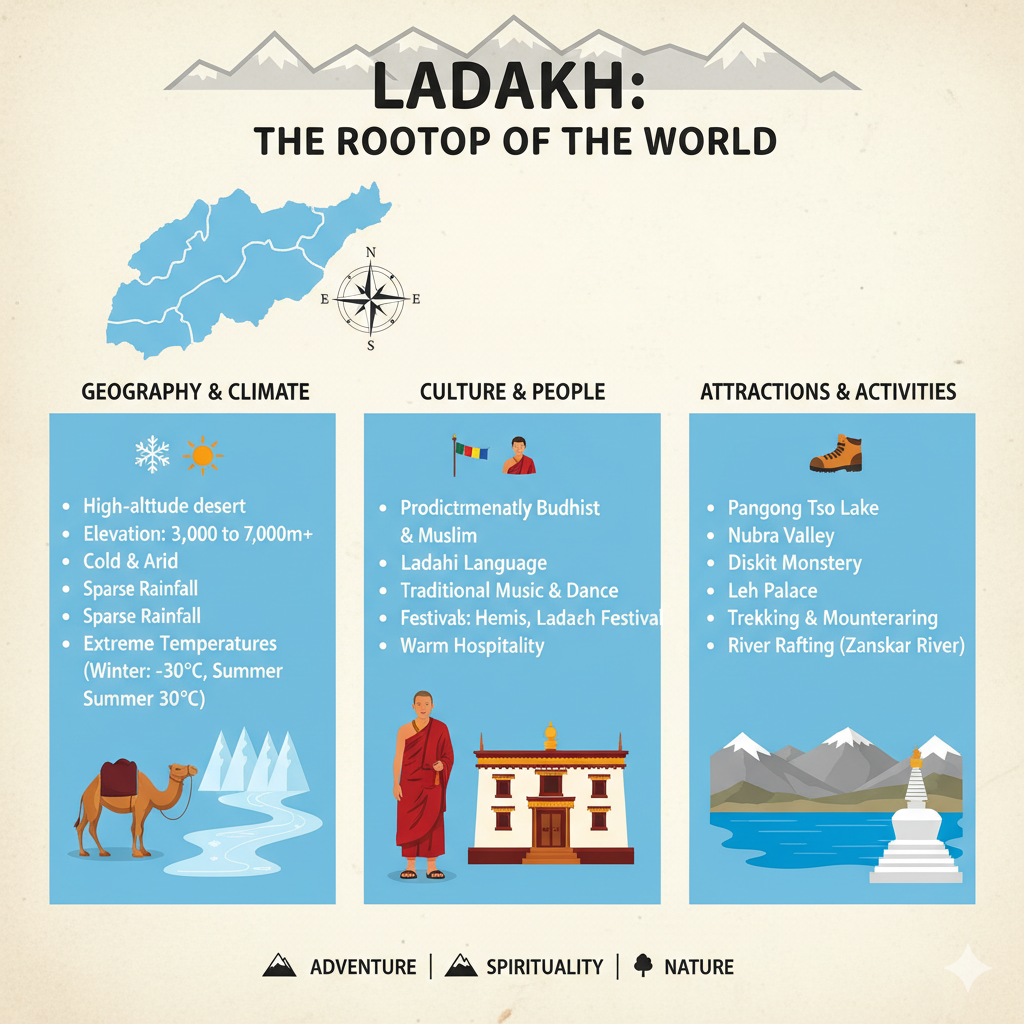
Ladakh, the “Land of High Passes,” is more than just a breathtaking vista of barren mountains and azure lakes. It’s a land of deep history, resilient culture, and immense strategic importance. For decades, it remained a remote jewel, but today, Ladakh stands at the crossroads of change. Its evolving landscape is having a profound impact on the economy of India, shaping tourism, influencing culture, and standing as a silent witness to geopolitical conflicts.
This comprehensive analysis explores the multifaceted role of Ladakh. We will delve into its history as a trading hub, examine the tourism boom that reshaped its economy, and understand the ongoing challenges and opportunities. This is the story of how a remote region is becoming central to India’s strategic and economic future.
From Ancient Trade Routes to a Modern Economy: Ladakh’s Historical Economic Significance
To understand Ladakh today, we must first look back. The region was never truly isolated. For centuries, it was a vital hub on the ancient Silk Road.
- Ladakh Historical Trade Routes Economic Significance Historically, Ladakh’s economy was built on more than just subsistence farming. It was a critical transit point for caravans traveling between Tibet, Kashmir, Central Asia, and the Indian plains. The Ladakh trade history with Tibet and India was rich and complex, centered around a sophisticated Ladakh trade and barter system history. Merchants traded in pashmina wool, salt, grain, silk, and spices, making Leh a bustling commercial center. This historical role laid the foundation for the region’s entrepreneurial spirit. The Ladakh history and its influence on economy cannot be overstated; it created a legacy of interconnectedness that defines the region even today.
The Tourism Gold Rush: How Ladakh Tourism Boosts Indian Economy
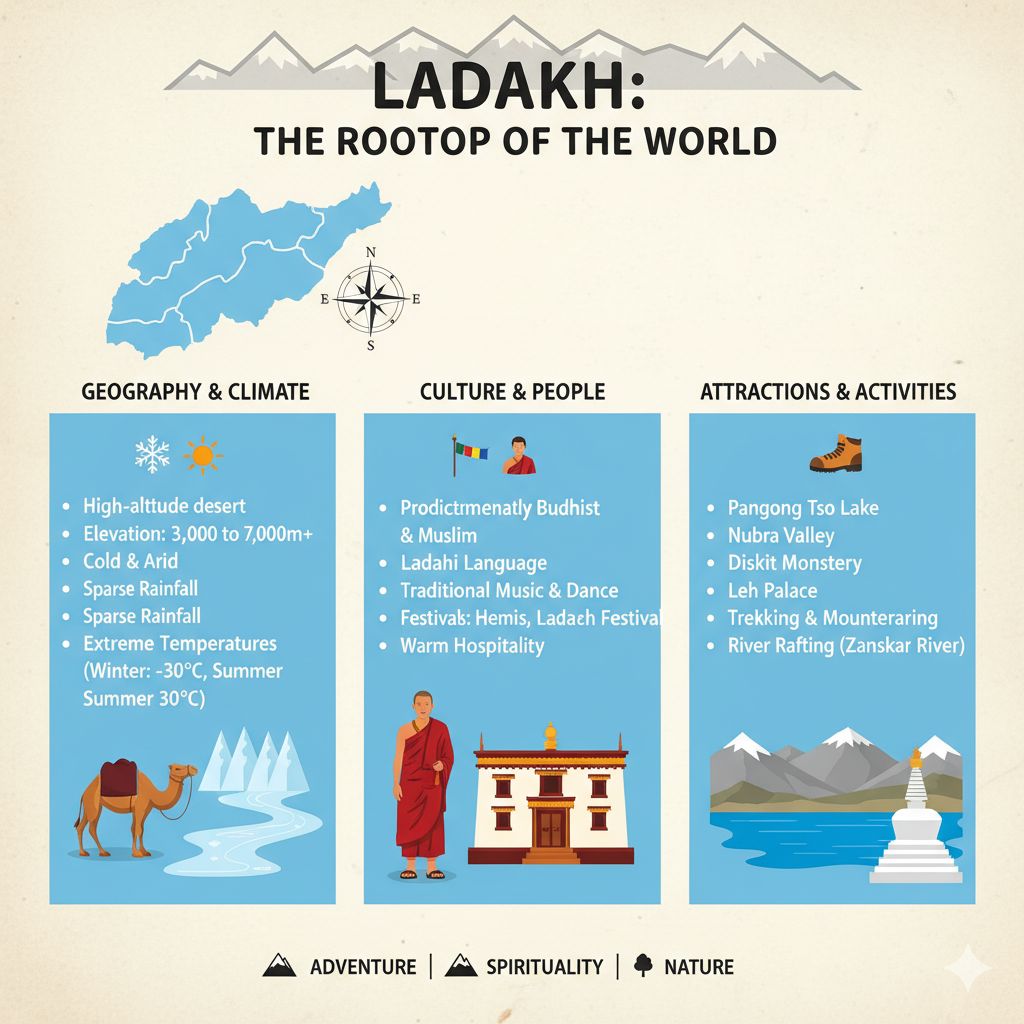
The single most significant transformation in Ladakh’s modern history began in 1974 when the region was opened to tourism. This decision unlocked its immense potential, turning breathtaking landscapes into a powerful economic engine.
- Ladakh’s Contribution to India’s Tourism Revenue Tourism is now the backbone of Ladakh’s economy, contributing up to 50% of its GDP. The influx of domestic and international visitors has created a vibrant service industry. This is not just a local phenomenon; it represents a significant part of India’s overall tourism portfolio. The Ladakh economic impact on India GDP, while modest in the grand scheme, is a powerful example of how niche, high-value tourism can create disproportionately large local and regional benefits. Projections for Ladakh tourism revenue figures 2025 anticipate continued growth, assuming geopolitical stability and sustainable practices.
- A Deep Dive into the Ladakh Tourism Impact Case Study India A closer look at Ladakh’s journey reveals a compelling case study. Before tourism, the economy was largely agrarian and insular. The Ladakh tourism-driven economic revival case study shows a dramatic shift. According to reports, tourism was generating approximately £25 million in revenue as far back as 2011. The Ladakh rise in tourism revenue after 2011 has been even more pronounced, driven by domestic travelers. This boom fueled a construction spree, with hotels, guesthouses, and restaurants mushrooming, especially in Leh. The Ladakh tourism impact on real estate prices has been significant, creating wealth for some but also raising concerns about affordability for locals.
- Ladakh Tourism and Job Creation Analysis One of the most crucial benefits has been employment. The Ladakh tourism job creation statistics paint a clear picture of progress. Thousands of direct and indirect jobs have been created for guides, drivers, hotel staff, restaurateurs, and artisans. The Ladakh tourism and job creation analysis shows that this sector is the largest employer outside of the government and the army. This has been particularly beneficial for Ladakh tourism impact on youth employment, offering alternatives to traditional livelihoods and migration. The Ladakh income generation through tourism services has raised living standards for a significant portion of the population.
The Broader Economic Canvas: Beyond Just Tourism
While tourism dominates the headlines, Ladakh’s economic story is more diverse. Several other sectors play a vital role in its development and integration with the Indian economy.
- The Unseen Pillar: Role of Army Base in Ladakh Economy The significant military presence in Ladakh is a direct consequence of its strategic location. Beyond its security role, the Ladakh economic impact of Indian army base is immense. The army is a major employer of local porters and laborers. It creates a steady demand for local produce and services, providing a stable economic cushion. Furthermore, the infrastructure built and maintained by the Border Roads Organisation (BRO), such as roads and bridges, is crucial for both military logistics and civilian/tourist movement. This makes the Ladakh local economy impact of Indian army presence a stabilizing force, especially during the lean tourist off-season.
- From the Land: Ladakh Agricultural Products Economic Value Traditional agriculture remains the soul of rural Ladakh. While challenging due to the harsh climate, Ladakh traditional agriculture economic contribution is significant for local sustenance. Today, there’s a growing focus on commercializing unique local products. The apricots, apples, and especially sea buckthorn from Ladakh are gaining recognition in the Indian market. The Ladakh food products in Indian market economy are carving out a niche as organic, high-altitude superfoods. Efforts promoting Ladakh sustainable farming and economy aim to link agriculture with tourism, creating farm-to-table experiences and boosting rural incomes.
- The Golden Fibre: Ladakh Pashmina Industry and Economy Ladakh is the source of the world’s finest Pashmina wool, harvested from the Changthangi goats of the high-altitude Changthang plateau. The Ladakh pashmina industry and economy is a critical source of livelihood for the nomadic communities. While the raw wool travels to Kashmir for its intricate weaving, efforts are underway to create more value within Ladakh. This industry is a perfect example of the Ladakh livestock economy and local markets, connecting pastoralists to a global luxury market.
- Artisans and Heritage: Ladakh Handicrafts and Local Economy The region’s rich cultural heritage translates into a vibrant crafts sector. The Ladakh handicrafts and local economy are intertwined, with tourism providing a primary market for products like thangka paintings, hand-woven carpets, and intricate silver jewelry. For Ladakh local artisans and tourism income, the peak season is a crucial earning period. Supporting Ladakh artisan crafts and economic sustainability is key to preserving cultural skills and providing livelihoods. Furthermore, Ladakh handicraft exports and foreign exchange represent a growing opportunity for the local economy.
Governance, Development, and the Road Ahead
The administrative landscape of Ladakh has also evolved, directly impacting its economic trajectory. The formation of the Ladakh Autonomous Hill Development Council (LAHDC) in 1995 was a turning point.
- Ladakh Autonomous Council Economic Growth The LAHDC gave Ladakhis greater control over local governance and development planning. The Ladakh economy post autonomy 1995 effects were profound, allowing for more targeted investments in infrastructure and social welfare. The subsequent granting of Union Territory status in 2019 has further accelerated development, with the central government rolling out ambitious economic development plans for Ladakh region. There is a clear push for Ladakh economy diversification strategies to reduce the over-reliance on a single sector. This focus is crucial for long-term resilience. For more on regional development initiatives, you can explore the official portal for Ladakh Tourism.
Culture and Conflict: The Two Sides of Ladakh’s Reality
Ladakh’s economic journey cannot be seen in isolation from its unique cultural identity and its volatile geopolitical environment.
- Preserving the Soul: Ladakh Cultural Tourism Impact on Economy Ladakh’s culture is a primary tourist draw. The ancient monasteries, vibrant festivals like Hemis Tsechu, and the unique Tibetan Buddhist way of life are invaluable assets. The Ladakh cultural tourism impact on economy is immense, attracting a demographic of tourists willing to spend on authentic experiences. However, there is delicate balance to be struck. The challenge lies in ensuring that the Ladakh tourism and cultural preservation economics work in harmony. Unchecked tourism can commodify culture and erode traditions. Therefore, promoting Ladakh cultural heritage and tourism economy requires mindful policies that empower local communities to be the custodians of their heritage.
- The Shadow of the Dragon: Conflict Impact on Ladakh Economy India Ladakh’s location, bordering both China and Pakistan, makes it a region of immense strategic importance and perpetual tension. The conflict impact on Ladakh economy India is a constant, underlying reality. The impact of Ladakh border tensions on local economy is felt in multiple ways. It can disrupt trade routes, create uncertainty for investors, and impact tourist arrivals. The Ladakh economy post Indo-China 2020 conflict faced significant challenges. While patriotic tourism saw a domestic surge, the closure of certain areas and the general atmosphere of tension affected long-term planning. The Ladakh conflict zones economic challenges are particularly acute for communities living near the border, whose traditional grazing lands and trade opportunities are often curtailed. This underscores Ladakh’s critical role in India’s strategic border economy, where economic development is intrinsically linked to national security. In-depth analysis by think tanks like the Observer Research Foundation often covers the geopolitical and economic dimensions of the India-China border situation.
Navigating the Future: Sustainability and Challenges
While Ladakh’s economic growth is impressive, it faces significant hurdles that will define its future.
- The Environmental Dilemma: Ladakh Tourism Growth vs Environmental Preservation The fragile Himalayan ecosystem is Ladakh’s greatest asset and its greatest vulnerability. The surge in tourism has put immense pressure on scarce resources, particularly water. Waste management is a growing crisis. The environmental impact of tourism in Ladakh is visible and alarming. The path forward must be through sustainable tourism in Ladakh India. This involves promoting Ladakh eco-friendly tourism and economic growth, focusing on low-impact tourism, and enforcing stricter environmental regulations.
- Economic Vulnerabilities and the Need for Diversification The Ladakh economy dependence on tourism revenue is a double-edged sword. The COVID-19 pandemic brought the entire sector to a standstill, exposing this vulnerability. The Ladakh tourism seasonality economic effects also create problems, with income concentrated in a few summer months. Furthermore, the Ladakh economic challenges due to climate change are real, with melting glaciers and erratic weather threatening both agriculture and tourism. Therefore, Ladakh economic diversification beyond tourism is not a choice but a necessity. The government and local bodies are exploring sectors like renewable energy (solar), adventure sports, and processing local produce to create a more balanced and resilient economy.
Conclusion: Ladakh’s Balancing Act for a Prosperous Future
Ladakh’s journey is a microcosm of modern India’s opportunities and challenges. It is a story of a region leveraging its unique heritage and natural beauty to fuel economic growth, contributing to the national economy while forging its own identity. From the historical significance of its trade routes to its modern role as a tourism hotspot and a strategic frontier, Ladakh’s impact is undeniable.
The future of Ladakh hinges on a delicate balancing act: between development and preservation, between tourism and tradition, and between economic ambition and ecological responsibility. As India continues to invest in its “crown jewel,” the focus on sustainable development, economic diversification, and empowering local communities will determine whether Ladakh can truly achieve a prosperous and resilient future.
For those planning a trip, staying informed through reliable sources like The Times of India’s Ladakh section can provide current updates on travel and local conditions.
Frequently Asked Questions (FAQ)
- Q1: What is the main driver of Ladakh’s economy?
The main driver is tourism, which contributes up to 50% of Ladakh’s GDP. It has created thousands of jobs in hospitality, transport, and related services, significantly boosting the Ladakh local economy impact from tourism influx. - Q2: How does the Indian Army presence affect Ladakh’s economy?
The Indian Army has a significant positive economic impact. It is a major employer, a large-scale purchaser of local goods and services, and its infrastructure development (like roads) is vital for both civilian and tourist movement. This provides a stable economic foundation, especially during non-tourist seasons. - Q3: What are the primary economic challenges facing Ladakh?
Ladakh faces several challenges: over-dependence on seasonal tourism, immense environmental pressure from tourist activities, water scarcity, and the economic uncertainty caused by ongoing border conflicts. The Ladakh economic challenges due to climate vulnerability are also a major concern. - Q4: How did Ladakh’s economy function before tourism?
Before 1974, Ladakh’s economy was primarily based on subsistence agriculture, animal husbandry (especially pashmina goats), and a traditional barter system. It was also a historical hub on the trade routes connecting India, Tibet, and Central Asia. - Q5: What is the economic significance of the Ladakh Pashmina industry?
The Pashmina industry is vital for the nomadic pastoral communities of the Changthang region. It provides a crucial source of income and connects a traditional livelihood to a global luxury market, forming a key part of the Ladakh livestock economy and local markets. - Q6: How has the creation of the Ladakh Autonomous Hill Development Council (LAHDC) influenced its economy?
The LAHDC, formed in 1995, gave Ladakhis greater control over local planning and development. This led to more focused investments in infrastructure, education, and health, paving the way for sustained Ladakh autonomous council economic growth. - Q7: What efforts are being made for Ladakh economic diversification?
Efforts are underway to diversify beyond tourism. Key areas of focus include promoting and marketing local agricultural products like apricots and sea buckthorn, developing the handicrafts sector for export, and exploring the potential for renewable energy, especially solar power. - Q8: What is the impact of the India-China conflict on Ladakh’s local economy?
The conflict creates significant economic uncertainty. It can disrupt trade, lead to the closure of tourist areas near the border, and deter investment. The impact of Ladakh border conflict on trade and local livelihoods, especially for communities in border areas, can be severe. - Q9: How is sustainable tourism being promoted in Ladakh?
Sustainable tourism is being promoted through policies that encourage eco-friendly practices, waste management initiatives, and the development of homestays that benefit local communities directly. The goal is to balance Ladakh tourism growth vs environmental preservation. - Q10: What is the role of Ladakh in India-China trade relations?
Historically, Ladakh was a conduit for trade. Today, formal trade is limited and heavily impacted by geopolitical tensions. Ladakh’s primary role in India-China trade relations is currently more strategic than economic, serving as a sensitive border region where economic activity is closely tied to national security.