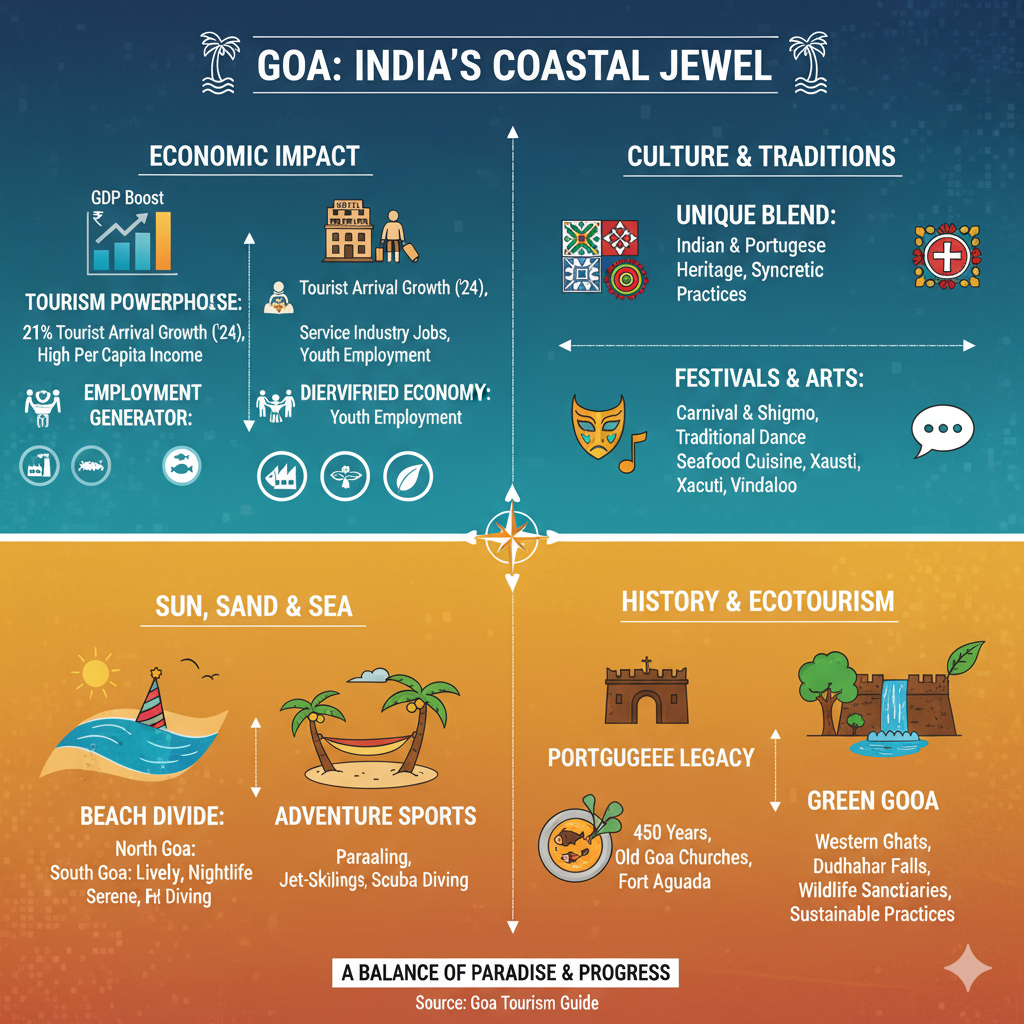
Goa is not just a destination; it’s an experience, a vibrant feeling that captures the hearts of millions. Often hailed as Goa as a tourist paradise in India, this small state on the western coast is a global powerhouse of tourism, culture, and history. It represents a Goa’s unique blend of Indian and Portuguese culture that cannot be found anywhere else on earth.
But beyond the sun-kissed beaches and swaying palms lies a complex and robust economic engine. We will explore the deep Goa tourism impact on Indian economy, delve into its sun-drenched beaches, uncover its rich culture and traditions, and journey through its layered history. This is your definitive guide to understanding Goa in its entirety.
The Economic Powerhouse: How Goa’s Tourism Boosts India’s GDP
When we discuss the economic contribution of tourism in Goa, we are looking at a model that significantly punches above its weight. Goa’s economy is a fascinating case study, with tourism acting as its backbone.
*The Core Engine: Understanding the Role of Tourism in Goa’s Economy
The role of tourism in Goa’s economy is paramount. It is the single largest industry, driving growth across multiple sectors. The state’s economy is heavily reliant on the Goa’s tertiary sector and service industry, which includes hotels, restaurants, transportation, and entertainment. This vibrant sector is the primary reason for the state’s high per capita income, one of the highest in India.
The employment generated by tourism in Goa is staggering. A significant portion of the population is directly or indirectly employed by the tourism industry, highlighting the deep Goa tourism impact on employment rates. From hotel staff and tour guides to taxi drivers and shack owners, the industry provides livelihoods for thousands. This is especially true for Goa tourism and youth employment, offering seasonal and permanent jobs that fuel local spending.
*Goa’s Gross State Domestic Product (GSDP) Trends
While tourism dominates, it’s essential to look at the complete picture by analyzing Goa’s Gross State Domestic Product trends. The state has actively diversified its economic portfolio. Insights from Goa’s economic survey 2024-25 insights (hypothetically) would show strong performance.
The economy is broadly divided:
- Goa’s primary sector economic growth includes agriculture and fishing. While Goa’s agriculture impact on economy has lessened, it remains vital for local supply. The Goa’s fishing industry and economy is also a key traditional sector.
- The Role of Goa’s secondary sector economy is surprisingly robust. Goa is home to a massive pharmaceutical industry in Goa economy, one of the largest hubs in India, contributing significantly to exports and GSDP.
- As mentioned, the tertiary sector, powered by tourism, is the undisputed leader. The Goa state GDP contribution by sector clearly shows services as the dominant force.
This economic boom, driven by tourism, has a direct impact on India’s foreign exchange earnings. Every foreign tourist arrival brings in valuable currency, strengthening the national reserve.
The Tourism Engine: Growth, Statistics, and Development
Goa’s status as a Goa as a global destination for tourism is backed by hard numbers. The state’s ability to attract a diverse range of visitors is a testament to its enduring appeal and strategic development.
*Goa’s Tourism Growth Statistics 2024-25: A Closer Look
Stakeholders are keenly watching the Goa’s tourism growth statistics 2024-25. Recent trends, like the 21% growth in tourist arrivals in ’24 reported by some sources, indicate a strong post-pandemic recovery. We are seeing a remarkable surge in Domestic tourists in Goa 2024 growth, who are rediscovering Goa as a safe and accessible paradise.
Simultaneously, Foreign tourist arrivals in Goa statistics are climbing back, crucial for the state’s high-value tourism segment. Analyzing Goa’s tourist arrivals yearly data and Goa tourist footfall comparison over years shows a consistent upward trajectory, barring major global events. This data is vital for understanding Goa tourist seasonality and economic impact, as the state works to promote itself as a year-round destination.
*Building Paradise: Goa Hospitality Industry Expansion
This influx of tourists is supported by a massive Goa’s tourism infrastructure development. The Goa hospitality industry expansion is visible everywhere. This includes everything from luxury resorts to boutique hotels, reflecting the Hotel industry growth in Goa 2024.
A key part of this growth is the diversification of accommodation. The trend of Homestays and guesthouses in Goa allows for more authentic, community-based tourism. We are also seeing a rise in Eco-friendly accommodations in Goa, catering to the conscious traveler. These Goa tourist accommodation trends 2024 show a market that is maturing and diversifying.
*Policy and Planning: The Future of Goan Tourism
This growth is not accidental. It is guided by State government tourism policies in Goa and supported by Indian government tourism policies for Goa. There are comprehensive Tourism development plans in Goa aimed at improving connectivity (like the new MOPA airport), enhancing visitor experiences, and ensuring sustainability.
Effective Goa tourism marketing campaigns are run globally to attract different Tourist demographics visiting Goa. The goal is clear: to solidify Goa’s position as a premier global destination while managing the Goa tourism economic challenges and solutions that come with rapid growth.
The Sun, Sand, and Sea: A Guide to Goa’s World-Famous Beaches
No article about Goa is complete without paying homage to its legendary coastline. The Goa beach tourism and local economy are deeply intertwined; beach shacks, water sports, and small businesses thrive on the daily influx of visitors.
*The Great Divide: South Goa vs North Goa Beaches
The first question every visitor asks is: North or South? The South Goa vs North Goa beaches debate defines the Goan experience.
- North Goa: This is the vibrant, bustling heart of Goa. It’s famous for its electric nightlife, bustling markets, and iconic beaches like Baga, Calangute, and Anjuna. It’s where you’ll find the biggest Goa’s nightlife hotspots and economic benefits. The Impact of nightlife tourism on Goa’s economy is significant, supporting a vast ecosystem of clubs, bars, and restaurants.
- South Goa: This region offers a more serene, laid-back experience. Beaches like Palolem, Agonda, and Varca are known for their pristine white sands and tranquil atmosphere. It’s the perfect choice for those seeking relaxation and is home to many of the Best family beaches in Goa.
*Thrills on the Waves: Adventure and Water Sports
Goa is a playground for thrill-seekers. The Famous beaches for water sports in Goa, such as Baga and Candolim, offer everything from parasailing and jet-skiing to banana boat rides. The Goa’s water sports activities popularity has boomed, leading to new Trends in adventure tourism in Goa. This includes activities like scuba diving, kayaking, and white-water rafting on the Mhadei River.
*Safety and Sustainability on the Shore
With millions visiting, ensuring Goa beach safety and tourist guidelines is a top priority. Lifeguard services are present on major beaches. Furthermore, there is a growing awareness of the need for conservation. Many Goa beach clean-up initiatives, often led by local communities and NGOs, are working to protect the coastline. This push is creating more Beaches in Goa for sustainable tourism, where visitors can enjoy the beauty responsibly. For those on a budget, there are plentiful Budget travel tips for Goa beaches, like eating at local shacks and using public transport.
The Soul of Goa: A Tapestry of Culture, Tradition, and Festivals
What truly sets Goa apart is its soul. The state’s culture is a rich, syncretic blend that has evolved over centuries.
*A Living Heritage: Goa’s Unique Blend of Indian and Portuguese Culture
The most defining characteristic is the Portuguese influence on Goa culture. After 450 years of Portuguese rule, this influence is woven into the fabric of daily life—from the architecture and cuisine to the music and religion. This is not a forgotten past; it’s a living, breathing part of the Goa local traditions and modern influences.
*The Rhythms of Life: Music, Dance, and Festivals
Goa’s heart beats to a unique rhythm. The Goa’s music and dance heritage is a fusion of Konkani folk music and Western classical and pop influences. You can witness this at Goa’s traditional dance and music concerts.
This vibrancy explodes during its festivals. Goa’s cultural festivals and traditions are a sight to behold. The most famous are Goa’s festivals: Carnival and Shigmo. The Goa Carnival is a three-day Catholic festival of music, dancing, and parades, while Shigmo is a vibrant Hindu spring festival. These Festivals celebrated in Goa and their history draw huge crowds. Beyond these, Goa beach festivals and their economic impact are also growing, along with Goa’s annual music festivals and events that attract global artists.
*The Taste of Goa: A Gastronomic Journey
Goa’s cuisine and food tourism trends are a major draw. Goan food is a delicious blend of coastal Indian flavors and Portuguese techniques. You can find Traditional Goan food recipes like Xacuti (a complex curry) and Vindaloo (originally a pork dish).
Don’t miss the Popular street foods in Goa, like fish cutlet pao or the tangy pani puri. The rise of Goa food festivals and culinary tourism highlights food as a central part of the Goan experience.
*Local Life: Arts, Crafts, and Markets
To truly understand the culture, you must explore its local expressions. The Konkani language and culture in Goa are the bedrock of its identity. You can see Goa’s art and folk tradition preservation efforts in museums and local art galleries.
A visit to Goa’s local markets and shopping culture is a must. The famous Goa’s night markets and local crafts in Anjuna and Arpora are treasure troves for Goa’s traditional arts and crafts. Here, you can buy everything from spices and teas to handmade leather goods and items from Goa’s textile and handicraft industries.
Echoes of the Past: Goa’s Rich History and Heritage
Goa’s present is built on a profound and complex past. A Goa travel guide for history lovers would be filled with tales of empires, trade, and faith.
*The Portuguese Legacy: 450 Years of History
The History of Goa under Portuguese rule (1510-1961) is the most defining period. This history is not just in Goa in Indian history textbooks; it’s etched in stone across the state. The Portuguese made Old Goa their capital, and its grandeur still resonates.
*Sentinels of Time: Goa’s Historical Forts and Landmarks
You can trace this history through Goa’s historical forts and landmarks. Fort Aguada, overlooking the Arabian Sea, and Chapora Fort, famous for its stunning sunset views, are among the Top historical sites in Goa. Exploring these sites, perhaps on Goa’s colonial history walking tours, feels like stepping back in time.
*A Mosaic of Faith: Churches, Temples, and Harmony
The Goa’s tradition of Catholicism and churches is a central part of its heritage. The Historic churches to visit in Goa, such as the Basilica of Bom Jesus (a UNESCO World Heritage site) and the Se Cathedral, are magnificent examples of Goa’s colonial architecture highlights. These are not just tourist spots but active Goa’s religious pilgrimages sites.
However, Goa is a shining example of Religious diversity in Goa’s culture. Before the Portuguese, Goa was a prominent Hindu region, and its ancient temples, like the Mangueshi Temple, are equally revered. The state is celebrated for its Goa’s religious harmony and coexistence, where churches and temples often stand side-by-side. This has led to fascinating Goa’s syncretic religious practices. The preservation of all these sites is a key part of Goa’s cultural heritage preservation efforts.
Beyond the Beaches: Ecotourism and Sustainable Practices in Goa
While beaches are the main draw, there are countless Tourist attractions in Goa beyond beaches. The state’s interior is a lush, green paradise, and there is a growing movement towards sustainable tourism.
*The Green Heart: Western Ghats and Wildlife
Goa is blessed to be located on the edge of the Western Ghats, a UNESCO World Heritage site. The Western Ghats biodiversity near Goa is incredible. This region is home to dense forests, stunning waterfalls (like Dudhsagar), and a rich variety of life.
Visitors can explore Ecotourism opportunities in Goa by visiting its protected areas. The Goa wildlife sanctuaries to visit, such as the Bhagwan Mahavir Sanctuary and Mollem National Park, offer jungle safaris and trekking. These Goa’s natural parks and eco-tourism sites and Goa eco parks and nature trails showcase the stunning Goa’s proximity to Western Ghats flora and fauna.
*The Path to Sustainability
With mass tourism comes challenges. The Impact of tourism on Goa’s environment is a serious concern, from waste management to water usage.
In response, many Regenerative tourism initiatives in Goa are taking root. The state is focusing on Goa in sustainable tourism rankings by promoting practices that give back to the environment and the community. This includes protecting Goa’s traditional fishing communities and ensuring Goa tourism and local community benefits are distributed fairly. The goal is to find a balance, to ensure that this paradise is preserved for generations to come by welcoming visitors with the traditional Goa local customs and welcoming practices.
*Conclusion: Goa’s Enduring Allure—A Balance of Paradise and Progress
Goa is a land of fascinating contrasts. It is a relaxed beach paradise and a bustling economic hub. It is a place of historical reflection and modern revelry. Its role in India’s coastal tourism is unmatched, but its identity is so much more.
From the Goa tourism and local economy of the coastal shacks to the global impact of its pharmaceutical industry, Goa is a vital piece of the Indian mosaic. Its culture, a product of centuries of blending, offers endless Goa culture and tradition blog ideas.
As Goa navigates the future, it faces the crucial task of balancing development with preservation. But if its past is any indication, this remarkable state will continue to adapt, thrive, and enchant all who walk its red earth and golden sands.
*Frequently Asked Questions (FAQ) About Goa
1. What is the biggest economic contribution of tourism in Goa?
The biggest contribution is to the state’s GSDP (Gross State Domestic Product) and employment. The Goa’s tertiary sector and service industry, which is almost entirely tourism-driven, is the largest component of its economy, and employment generated by tourism in Goa is the highest of any sector.
2. What is the real difference between South Goa and North Goa beaches?
The South Goa vs North Goa beaches divide is mainly about atmosphere. North Goa is known for its high energy, nightlife, flea markets, and concentration of tourist activities. South Goa is quieter, with more pristine, relaxing beaches and luxury resorts, making it ideal for families and couples seeking tranquility.
3. What is the history of Goa under Portuguese rule?
Goa was under Portuguese rule for approximately 450 years, from 1510 until it was liberated by India in 1961. This long period left a deep and lasting Portuguese influence on Goa culture, which is visible today in its architecture, religion (Goa’s tradition of Catholicism and churches), cuisine, and music.
4. What are the best tourist attractions in Goa beyond beaches?
There are many! You can explore the Goa wildlife sanctuaries to visit in the Western Ghats, see the Dudhsagar Falls, visit spice plantations, explore the Goa’s historical forts and landmarks like Fort Aguada, and take Goa’s colonial history walking tours through the UNESCO-listed churches of Old Goa.
5. How does Goa’s tourism boost India’s GDP?
Goa’s tourism contributes in several ways. It is a major source of Goa’s impact on India’s foreign exchange earnings from international tourists. It also generates massive domestic tourism spending, creates jobs (reducing unemployment figures), and pays significant taxes to the central government, all of which boost India’s overall GDP.
6. What are the major cultural festivals in Goa?
The two most famous are Goa’s festivals: Carnival and Shigmo. Carnival is a vibrant Christian celebration held before Lent, filled with parades and music. Shigmo is a spectacular Hindu spring festival celebrated with folk dances and traditional parades.
7. Is Goa’s economy diversified beyond tourism?
Yes. While tourism is the backbone, the Role of Goa’s secondary sector economy is very strong. Goa has a major pharmaceutical industry in Goa economy, contributing significantly to India’s exports. Mining (though now regulated) and agriculture also play a role.
8. What kind of sustainable or ecotourism opportunities in Goa exist?
Ecotourism is a growing field. You can visit Goa’s natural parks and eco-tourism sites, stay in eco-friendly accommodations in Goa, and take guided treks in the Western Ghats. Many initiatives also focus on Goa beach clean-up initiatives and community-based tourism.
9. What is Goan cuisine like?
Goa’s cuisine and food tourism trends are centered on seafood, coconut, rice, and a unique blend of Indian spices and Portuguese culinary techniques. Famous dishes include fish curry rice, Xacuti, Vindaloo, and the sweet Bebinca.
10. What is the best way to experience Goa’s local culture?
Visit the Goa’s local markets and shopping culture like the Mapusa Friday Market, attend a Goa’s traditional dance and music concerts, eat at local family-run restaurants, and explore the villages away from the main beach belt to see the Goa local customs and welcoming practices firsthand. You can learn more from the Goa Tourism Development Corporation (GTDC).