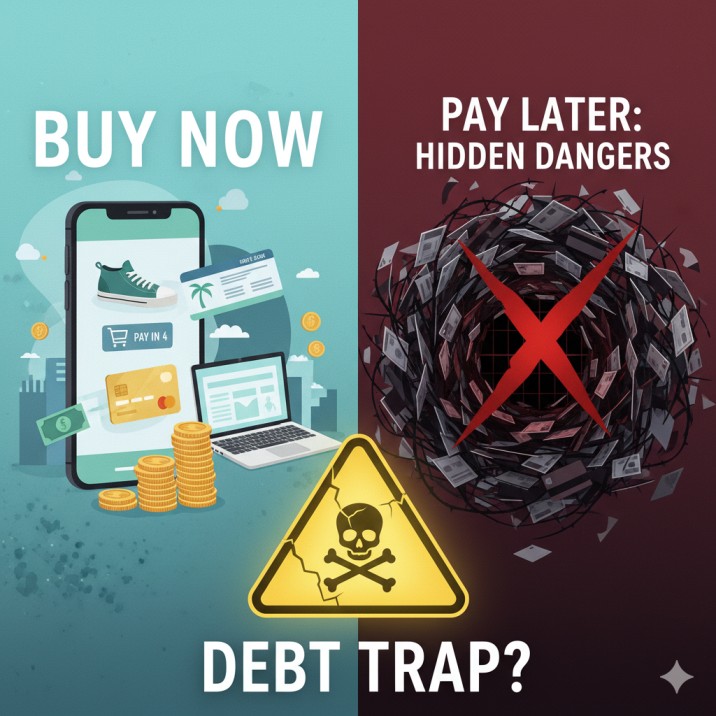
You’re scrolling through your favorite online store and see it: the perfect pair of sneakers, the new gadget you’ve been eyeing, or a flight to a dream destination. Right next to the price, you see a tempting offer: “Pay in 4 interest-free installments of $25.” It seems too good to be true. No credit check, instant approval, and you get your item right away while spreading the cost over time. Welcome to the world of Buy Now, Pay Later (BNPL).
This revolutionary way to shop has exploded in popularity, transforming online checkouts and even physical store experiences. Services like Klarna, Afterpay, and Affirm have become household names, offering a seamless and modern alternative to traditional credit cards. They promise a simple, transparent way to manage your purchases.
But is it really that simple? Behind the slick apps and zero-interest promises, there’s a complex financial system with potential pitfalls that every consumer needs to understand. This guide will pull back the curtain on the BNPL industry. We’ll explore how Buy Now, Pay Later services actually work, uncover the hidden risks of using installment payments, and give you the tools you need to use these platforms smartly and safely. Is BNPL the future of shopping, or is it a debt trap in disguise? Let’s find out.
What is Buy Now, Pay Later and How Does It Really Work?
At its core, Buy Now, Pay Later is a type of short-term, point-of-sale installment loan. It allows you to purchase a product or service immediately but pay for it over a set period in multiple, usually equal, installments. The most common model is the “Pay in 4,” where you pay 25% of the total cost upfront, and the remaining 75% is split into three more payments, typically due every two weeks.
Think of it as a modernized, digitized version of the old layaway plans, but with a crucial difference: you get your item right away, not after you’ve paid it off.
Here’s a step-by-step breakdown of the customer journey:
- Shopping: You shop online or in-store at a participating merchant.
- Checkout: At the payment stage, you select the BNPL provider’s option (e.g., “Pay with Klarna” or “Afterpay”).
- Instant Decision: You’re redirected to the BNPL provider’s platform, where you enter a few basic pieces of information (like your name, email, and phone number). The provider runs a quick, soft credit check that doesn’t impact your credit score. The approval process is automated and takes only seconds.
- First Payment: If approved, you make the first installment payment immediately using your debit or credit card.
- Order Complete: Your order is processed by the merchant, and your item is shipped just as if you had paid the full amount upfront.
- Automatic Repayments: The remaining installments are automatically charged to your card on the scheduled dates. The BNPL provider will send you reminders before each payment is due.
Behind the scenes, the BNPL company pays the merchant the full amount for your purchase upfront (minus a transaction fee). They then take on the responsibility of collecting the remaining payments from you. This is the fundamental business model of Buy Now, Pay Later platforms: they make money by charging fees to the merchants, who are willing to pay for the increased sales and higher average order values that BNPL options often generate.
The Major Players: Comparing Klarna, Afterpay, Affirm, and Others
While thousands of companies are entering the BNPL space, a few key players dominate the market. Understanding the differences between the top Buy Now, Pay Later apps is essential, as their terms, fees, and lending models can vary significantly.
Afterpay: The “Pay in 4” Pioneer
Afterpay is largely synonymous with the classic interest-free installment model.
- How it Works: Splits the purchase into four equal installments, paid every two weeks. The first payment is due at the time of purchase.
- Interest: 0% APR.
- Fees: No interest is charged, but Afterpay’s late payment fees can be significant. If you miss a payment, your account is immediately paused, and a late fee is charged (typically around $8), with a cap on the total fees per order.
- Best For: Shoppers who want a simple, predictable, and strictly interest-free option for smaller to medium-sized purchases and are confident they can make payments on time.
Klarna: The Flexible All-in-One App
Klarna offers a wider variety of payment options, making it one of the most versatile providers.
- How it Works: Klarna provides several choices:
- Pay in 4: The standard model, similar to Afterpay.
- Pay in 30: Buy the item now and pay the full amount within 30 days, interest-free.
- Financing: For larger purchases, Klarna offers traditional financing plans that can last from 6 to 36 months. These plans often do charge interest.
- Interest: Varies by plan. “Pay in 4” and “Pay in 30” are interest-free. Financing plans have an APR.
- Fees: Klarna charges late fees on missed installment payments.
- Best For: Consumers who want more flexibility than a simple “Pay in 4” model and may need longer-term financing for big-ticket items.
Affirm: The Transparent Financing Specialist
Affirm focuses on transparency, especially for larger purchases, by showing you the total interest you’ll pay upfront.
- How it Works: Affirm offers installment plans that can range from a few weeks to several years. Unlike Afterpay, they don’t always offer a zero-interest option.
- Interest: APRs can range from 0% to 36%, depending on your creditworthiness and the merchant. The key is that they use simple interest, not compounding interest. You’re told the total interest cost in dollars before you agree, and that amount never changes.
- Fees: Affirm prides itself on having no late fees, no hidden fees, and no prepayment penalties. Their revenue comes entirely from merchant fees and the interest they charge consumers.
- Best For: Shoppers making larger purchases (like furniture or electronics) who want a clear, fixed payment schedule and appreciate the “no late fees” policy.
Other notable players include PayPal’s “Pay in 4”, which is integrated directly into the PayPal wallet, and Zip (formerly Quadpay), which operates similarly to Afterpay.
The Hidden Dangers: What are the Disadvantages of Buy Now, Pay Later?
The convenience of BNPL is undeniable, but it’s crucial to look past the marketing and understand the potential risks. These services make it incredibly easy to spend money you don’t have, and the consequences can be serious.
The Psychology of Overspending
The biggest danger of BNPL is its effect on your spending habits. By breaking a $200 purchase down into four “easy” payments of $50, the service lowers the psychological barrier to spending. It doesn’t feel like you’re spending $200. This can lead to impulse buying and a loss of control over your budget. You might end up buying items you don’t truly need or can’t realistically afford simply because the immediate financial hit seems small.
“Loan Stacking” and the Path to Debt
Because each BNPL transaction is a separate loan, it’s dangerously easy to “stack” them. You might have a “Pay in 4” plan for a pair of shoes from one store, another for concert tickets, and a third for home goods. Individually, each bi-weekly payment of $30 or $40 seems manageable. But when they all add up, you could suddenly be facing hundreds of dollars in automatic withdrawals from your bank account every two weeks. This can quickly overwhelm your budget and lead to a cycle of debt that’s hard to escape.
The Sting of Late Fees and Negative Consequences
While many BNPL plans are “interest-free,” that’s only true if you pay on time. The consequences of a missed BNPL payment can include:
- Hefty Late Fees: Most providers (except Affirm) charge late fees. While a single $8 fee might not seem like much, they can add up across multiple loans.
- Account Suspension: Your account will likely be frozen, preventing you from making any new purchases.
- Collections: If you default on your payments for an extended period, the BNPL provider can send your debt to a collections agency. This is a serious step that can have long-lasting negative effects on your financial life.
- Damage to Your Credit Score: As we’ll discuss next, defaulting on a BNPL loan can absolutely hurt your credit score.
A False Sense of Security
Because BNPL services aren’t regulated in the same way as credit cards, they often lack the same consumer protections. For example, the process for disputing a charge or getting a refund for faulty goods can be more complicated, as you’re dealing with both the merchant and the lending provider. For more information on consumer rights in lending, you can refer to resources from regulatory bodies like the Consumer Financial Protection Bureau (CFPB).
Does Buy Now, Pay Later Affect Your Credit Score? The Surprising Answer
This is one of the most confusing aspects of BNPL. For a long time, the answer was “mostly no,” but that is changing fast. Here’s a breakdown of how BNPL impacts your credit history.
- The Soft Check (Applying): When you apply for a BNPL plan at checkout, most providers perform a soft credit inquiry. This does not affect your credit score. It’s simply a quick look to verify your identity and assess your risk level.
- On-Time Payments (The Good News): Historically, on-time payments for standard “Pay in 4” plans were not reported to the major credit bureaus (Experian, Equifax, TransUnion). However, this is changing. Major bureaus are now creating systems to incorporate this data. Experian Boost, for example, allows you to add positive BNPL payment history. This means responsible BNPL use could soon help build your credit score.
- Late and Missed Payments (The Bad News): This is where it gets serious. While they might not report your good behavior, BNPL companies are much more likely to report your bad behavior. If you miss payments and your account goes into default or is sent to collections, it will almost certainly be reported to the credit bureaus. A collection account can stay on your credit report for up to seven years and significantly lower your score.
- Longer-Term Financing Plans: For longer-term financing plans (like those from Affirm or Klarna), these often function like traditional loans. The provider may perform a hard credit check, and they will almost always report your payment history—both good and bad—to the credit bureaus.
The bottom line: Using BNPL irresponsibly is a fast way to damage your credit score. Using it responsibly might help your score in the future, but it’s not yet a guaranteed way to build credit history. To understand your score better, you can get a free credit report from sites authorized by federal law, like AnnualCreditReport.com.
BNPL vs. Credit Cards: Which is the Right Choice for You?
At first glance, an interest-free BNPL plan seems far superior to a credit card with a high APR. However, the reality is more complex. Feature Buy Now, Pay Later (BNPL) Traditional Credit Cards Approval Easy, instant approval with a soft credit check. Requires a formal application and a hard credit check. Interest Often 0% for “Pay in 4” plans. Interest is charged on longer-term financing. High APR (often 18-29%) if you carry a balance. No interest if paid in full by the due date. Fees Late fees for missed payments are common. Annual fees, late fees, over-limit fees. Credit Impact Missed payments can hurt your score. On-time payments may not help (but this is changing). All payment history is reported, helping you build a credit score if used responsibly. Rewards Generally no rewards, points, or cashback. Often offer valuable rewards programs, travel points, and cashback. Protections Fewer consumer protections for disputes, fraud, and returns. Strong federal consumer protections (e.g., Fair Credit Billing Act).
When BNPL might be better:
- For a specific, one-time purchase that you know you can afford to pay off within the short installment period.
- If you don’t have a credit card or have a low credit score that prevents you from getting one.
- If you want to avoid a hard credit inquiry on your report.
When a credit card is likely better:
- For everyday spending where you want to earn rewards.
- If you want to build a positive credit history.
- For larger purchases where you need stronger fraud and purchase protections.
- If you pay your balance in full every month, you get the benefits without paying interest.
Frequently Asked Questions (FAQ)
1. Can you use a credit card to pay for a BNPL plan?
Yes, most BNPL providers allow you to link a credit card as your payment method. However, this can be a risky strategy. You’re essentially using debt (your credit card) to pay off another debt (the BNPL loan). If you don’t pay your credit card bill in full, you’ll end up paying interest on your “interest-free” purchase.
2. Is there a credit limit with Buy Now, Pay Later?
Yes, but it’s not a fixed limit like a credit card. BNPL providers use a proprietary algorithm to determine your “spending power” for each transaction. This can change based on your payment history with them, the merchant, and the price of the item. A good payment history will generally increase how much you can spend.
3. What happens if I need to return an item I bought with BNPL?
You must handle the return directly with the merchant first, following their return policy. Once the merchant processes your return, they will notify the BNPL provider. The provider will then cancel any future payments and refund you for the payments you’ve already made. It’s important to continue making any scheduled payments until the return is fully processed to avoid late fees.
4. Are BNPL services safe and secure?
Reputable BNPL companies use industry-standard security and encryption to protect your personal and financial data. In this regard, they are generally as safe as any other online payment processor. The primary “safety” concern is not data security, but financial safety and the risk of overspending.
5. Can I pay off my BNPL loan early?
Absolutely. All major BNPL providers allow you to pay off your remaining balance early without any prepayment penalties. This is a smart way to manage your finances if you have the funds available.
6. Do all stores offer Buy Now, Pay Later?
No, but the number is growing incredibly fast. Most major online retailers and many physical stores have integrated at least one BNPL option. Some providers, like Klarna, also offer a virtual card in their app that allows you to use their service at almost any store, even if it’s not an official partner.
7. Is BNPL a good way to build credit for the first time?
Not yet, but it’s getting there. Currently, a traditional secured credit card is a more reliable way to build a credit history from scratch because all payments are reported. As credit bureaus become better at incorporating BNPL data, this may change, but for now, it’s not the primary tool for credit building.
8. Are there any age restrictions for using BNPL?
Yes, you must be at least 18 years old to use Buy Now, Pay Later services in the United States and most other countries.
9. Can BNPL be used for bills or groceries?
Generally, no. BNPL is designed for retail purchases of consumer goods. However, some newer fintech apps are starting to experiment with “Pay in 4” models for bills, but this is not yet a mainstream feature of providers like Afterpay or Klarna. For more on the evolution of financial tech, news outlets like CNBC’s technology section offer great insights.
10. What’s the difference between BNPL and a retailer’s store credit card?
A store credit card is a revolving line of credit that can only be used at that specific retailer. It functions like a regular credit card with a high interest rate if you carry a balance. BNPL is a fixed installment loan for a single purchase. It’s generally easier to get approved for BNPL and often comes with a 0% interest offer that store cards typically lack.
11. Can using BNPL too often get you denied for a mortgage?
It’s possible. Mortgage lenders conduct a deep dive into your financial habits. If they see that you are frequently relying on short-term loans like BNPL to make ends meet, they may view you as a higher-risk borrower, even if you’ve never missed a payment. It could signal a lack of savings or unstable cash flow.
12. Is the Buy Now, Pay Later industry regulated?
The regulatory landscape is still evolving. Currently, BNPL loans often exist in a legal gray area, as they are not always defined or regulated in the same way as traditional credit. However, governments and financial bodies around the world are now looking very closely at the industry and are expected to introduce stricter regulations to increase consumer protection.