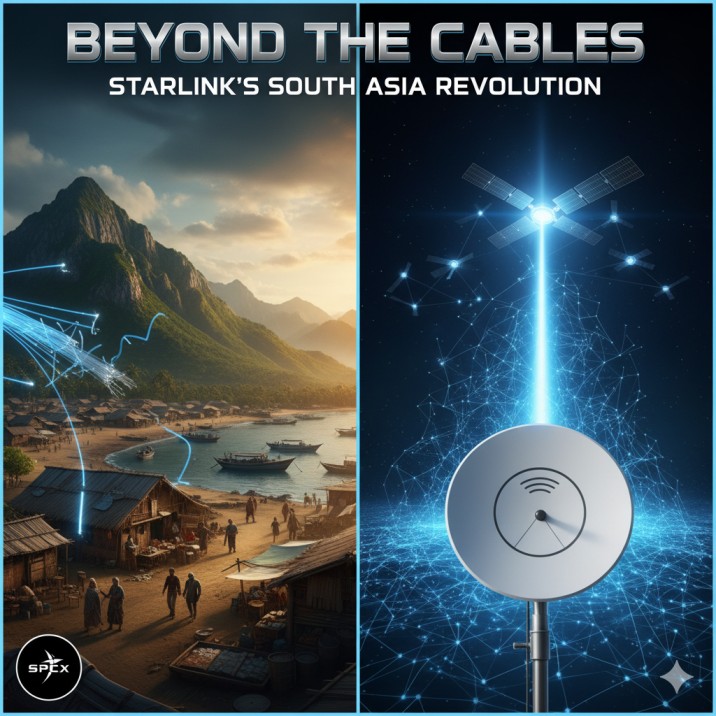
South Asia, home to nearly a quarter of the world’s population, presents one of the greatest paradoxes in global connectivity. While urban centers boast advanced 4G and burgeoning 5G networks, vast swathes of rural, mountainous, and coastal regions remain digitally marooned. Traditional infrastructure—laying fiber optic cables and building cell towers—is often too expensive or physically impossible due to challenging terrain.
Enter the Low Earth Orbit (LEO) satellite internet revolution, spearheaded by SpaceX’s Starlink.
This isn’t just an incremental upgrade; it’s a potential leapfrog technology designed to finally bridge the region’s stubborn digital divide. But the entry of this powerful, US-based system into India, Bangladesh, Pakistan, Nepal, and Myanmar is not straightforward. The Starlink role, cost, facilities in India, Bangladesh, Pakistan, Nepal, Myanmar is a complex story of technological promise meeting geopolitical hurdles, regulatory red tape, and market realities.
This comprehensive guide takes a forward-looking look at the impact of Starlink on South Asia, analyzing its projected costs, the facilities required for operation, and the unique challenges it faces in each country. We will explore how Starlink can boost rural connectivity and the long-term future of satellite internet in South Asia.
The Grand Promise: Starlink’s Unique Value Proposition for South Asia
Why is Starlink generating such immense interest in this region, and why is the importance of satellite internet for underserved communities so high? The answer lies in its core technological advantage: Low Earth Orbit.
Bridging the Digital Divide: Starlink’s Core Facility
The primary Starlink facility requirements for high-speed internet are not miles of cable or hundreds of mobile towers, but strategically placed satellite ground stations. These gateways are the critical connection points where data transfers from the orbiting satellites to the country’s existing terrestrial internet backbone.
The ability of LEO satellite connectivity to bypass damaged or non-existent ground infrastructure makes it an emergency lifeline and a long-term solution. In disaster-prone countries like Bangladesh, where cyclones frequently knock out mobile towers, or in the remote mountainous regions of Nepal, a satellite system provides the ultimate disaster relief communication solution. Furthermore, Starlink’s independence from local telecom monopolies offers a pathway to secure and independent internet access in South Asia, a crucial factor for business continuity and digital rights.
The Speed Revolution: Latency and Bandwidth Expectations
For years, the phrase “satellite internet” was synonymous with crippling lag. Starlink changes this narrative entirely.
Low latency satellite internet is essential for modern applications like video conferencing, online education, and e-commerce. Starlink, with its LEO satellites orbiting only hundreds of kilometers above Earth, offers latency as low as 20-50 milliseconds (ms). This is a massive improvement over traditional Geostationary (GEO) satellites, whose data transmission delays of 600ms or more made real-time activities frustratingly slow.
In terms of capacity, Starlink satellite bandwidth and its speed are revolutionary for rural users. While final speeds depend on local network congestion, users can generally expect download speeds ranging from 50 Mbps to over 200 Mbps. This is a considerable upgrade for many in rural India’s digital access struggle, where speeds often crawl below 10 Mbps. The Starlink potential download speeds in Pakistan rural areas could unlock tremendous economic potential for small businesses and freelancers.
Country-by-Country Analysis: Regulatory Hurdles and Launch Timelines
Starlink’s journey into South Asia is not a single seamless launch, but a series of complex regulatory battles with each nation’s government and telecom authority.
India: The Race to Commercial Rollout and Competition
Starlink’s regulatory status in India has been one of the most closely watched sagas in the region. After initial pre-orders were halted due to licensing issues, Starlink has since made significant strides. The final regulatory nod, including crucial licenses from the Department of Telecommunications (DoT) and the Indian National Space Promotion and Authorisation Centre (IN-SPACe approval for Starlink India), is clearing the path for commercial operations.
Key developments include:
- Ground Station Infrastructure: Starlink plans to establish a significant number of Starlink ground stations across India, placing it ahead of competitors in infrastructure readiness.
- Competition: The Indian market is set to be a battleground. Starlink faces stiff competition from entrenched players like Reliance Jio (Jio Satellite Communications) and Bharti Airtel-backed Eutelsat OneWeb. The Starlink competition with Jio and OneWeb in India is expected to drive down prices and improve service quality for consumers.
- Administrative Spectrum Allocation: The Indian government’s decision to favor an administrative assignment of satellite spectrum over an auction was a significant win for Starlink, streamlining its entry. The impact of administrative spectrum allocation on Starlink India is expected to hasten deployment.
While the expected Starlink India launch date has been fluid, official security trials are underway, with a commercial rollout potentially expected by early to mid-2026.
Bangladesh: Official Availability and Economic Potential
The Starlink official availability in Bangladesh has progressed significantly, with local retailers already selling the necessary hardware kits. Bangladesh’s coastal connectivity challenges in Bangladesh make LEO satellite service particularly appealing for maritime, remote islands, and disaster recovery.
- Affordability Challenge: The Starlink hardware kit price in Bangladesh is currently high, ranging from BDT 23,850 to BDT 44,550 for the standard kit, with high monthly fees. This makes it a premium service, limiting the Starlink affordability for average Bangladeshi households.
- Freelancer and Exporter Boost: Bangladesh is a major hub for online freelancers. The role of Starlink for Bangladeshi freelancers is transformative, providing the reliable, low-latency connection required for competitive international work, mitigating the risk of state-controlled network outages.
- Geopolitical Balancing Act: Bangladesh’s decision to approve Starlink has been seen as a move toward diversification, balancing its reliance on technology from neighboring countries. The geopolitical implications of Starlink in Bangladesh are significant, touching upon security, trade, and diplomatic relations.
Pakistan: Licensing Delays and High Projected Cost
The Starlink license status in Pakistan has been marked by a stop-start regulatory process. Starlink has applied for licenses and is working to meet the various requirements, including registration with the Securities & Exchange Commission of Pakistan (SECP) and securing a No Objection Certificate (NOC) from the Pakistan Space Activity Regulatory Board (PSARB).
- Regulatory Hurdles: The process has faced several Pakistan Telecommunication Authority (PTA) Starlink regulatory challenges, with delays tied to mandatory security clearances and final registration.
- Projected Pricing: Initial reports suggest a high expected Starlink Pakistan monthly subscription cost, with premium residential packages costing around PKR 35,000 per month, plus a hefty one-time hardware fee. This high Starlink price in Pakistan and its market viability will likely restrict initial adoption to high-net-worth individuals, businesses, and remote enterprises.
- The Digital Divide Solution: The promise remains the same: to provide high-speed access to remote regions like Balochistan and Gilgit-Baltistan, addressing the severe internet access disparity in Pakistan.
Nepal: Legal Barriers to Full Foreign Ownership
Nepal represents a classic case of local law creating a barrier for a global company. The Starlink regulatory issues in Nepal primarily revolve around foreign investment rules.
- Foreign Investment Rule: Nepal’s regulation historically required foreign telecom companies to allocate a percentage of shares (often 20%) to a local partner. Starlink has reportedly sought 100% foreign investment approval for Starlink Nepal, which clashes with existing law, leading to a standstill with the Nepal Telecommunication Authority (NTA).
- The Cost Challenge: The Starlink expected price in Nepal is projected to be very high relative to the average income, creating a significant barrier for the majority of Nepali households, especially those in the Himalayas and other remote areas.
- Investment Proposal: Starlink has proposed a substantial Starlink investment proposal in Nepal, suggesting a willingness to integrate into the market if the foreign ownership hurdle can be overcome. Its entry would be transformative for Nepal’s mountain region connectivity.
Myanmar: The Challenge of Unofficial Use and Security
Myanmar’s situation is unique and fraught with complexity due to the country’s civil conflict and the lack of a stable, internationally recognized regulatory body.
- No Official License: Starlink does not have an official Starlink operating license in Myanmar. The current use of its terminals is considered unsanctioned.
- Misuse and Security Concerns: The most pressing issue is the widespread misuse of Starlink in Myanmar scam centers near the Thai border. This illegal use for sophisticated cybercrime has drawn international scrutiny from US Congressional committees. SpaceX has actively responded by disabling thousands of terminals in these regions to curb the Starlink use in transnational fraud.
- Freedom of Information: On the other hand, the Starlink role in Myanmar’s information access is undeniable. In a country where the military has cut off internet access to control information flow, Starlink’s independence is a vital tool for journalists, resistance groups, and human rights activists seeking to bypass the internet blackouts in Myanmar and provide a secure, uncensored communication channel.
The Cost-Benefit Analysis: Affordability and Economic Impact
The Starlink story in South Asia will ultimately be written by two forces: affordability for the mass market and the economic value it creates.
Breaking Down the Starlink Cost Components
The total cost of Starlink ownership consists of two primary components, both of which are high for the South Asian consumer base:
- Hardware Kit (CAPEX): The initial, one-time purchase of the terminal dish and router. This Starlink terminal equipment price is the single largest barrier, often costing the equivalent of several months’ median salary.
- Monthly Subscription (OPEX): The recurring fee for the service plan. The Starlink monthly subscription comparison with local ISPs shows it is substantially more expensive than basic fiber or mobile data plans, though it offers vastly superior service in areas with no other options.
The challenges of Starlink pricing in South Asia are undeniable. To gain traction beyond the elite, Starlink will need to introduce low-cost Starlink hardware in India and Pakistan through subsidized plans or the introduction of the smaller, cheaper Starlink Mini kit with localized pricing.
Economic Uplift and Job Creation
The introduction of high-speed, low-latency internet has a quantifiable economic benefit for the entire region. The economic impact of Starlink on rural development is immense:
- Remote Work and E-commerce: Reliable internet enables rural populations to participate in the global economy, fostering e-commerce growth in rural Bangladesh and enabling remote job opportunities for Indian youth without moving to crowded cities.
- Education and Health: Starlink for remote education and telemedicine can revolutionize service delivery. A reliable link allows for real-time video consultations with doctors and access to advanced online learning platforms, reducing the massive disparity in quality of life between urban and rural centers.
- Competition-Driven Improvements: The mere presence of a high-quality alternative like Starlink forces traditional ISPs in Pakistan and Nepal to invest heavily in their own infrastructure, leading to improved terrestrial internet quality in South Asia overall.
The Long-Term Outlook: Future Trends and Hybrid Networks
The long-term future of Starlink in South Asia is one of integration and ubiquity, moving beyond being just a niche service for the remote elite.
Integration with 5G and Local Telecoms
The next phase of satellite internet is not competition, but collaboration between Starlink and local telecom operators. Instead of selling directly to consumers, Starlink will increasingly serve as a satellite backhaul for 5G mobile networks. This means a local mobile operator (like a major provider in India) could use Starlink to connect a distant cell tower to the core network, providing seamless 5G service in areas where laying fiber is too difficult.
This hybrid connectivity solution in South Asia will create a powerful, resilient network where local providers leverage satellite power for remote area network expansion, making the overall service more robust and accessible.
Government and Enterprise Services
Starlink’s reliability and speed make it an ideal fit for high-value enterprise and government clients. The Starlink services for government and military in South Asia will be a key revenue stream, providing secure, off-grid communication for defense, border control, and national data networks. Moreover, the Starlink mobility package for maritime and aviation is already proving indispensable for ships in the Indian Ocean and flights traversing the region.
Conclusion: A Connected Future Hinges on Regulation
Starlink is not merely an option for South Asia; for millions of people, it is the only viable path to true high-speed connectivity. Its low-latency service, delivered via thousands of LEO satellites, offers a powerful antidote to the region’s geographic and infrastructural hurdles.
From the regulatory complexities in India and Pakistan to the foreign ownership debate in Nepal and the critical security concerns in Myanmar, Starlink’s regional narrative is a microcosm of its global journey. The technology is proven, the demand is immense, and the economic advantages of Starlink connectivity are transformational. The final piece of the puzzle lies not with engineers in California, but with the regulators and policymakers in Dhaka, Delhi, Islamabad, and Kathmandu. When they clear the final obstacles, the Starlink future in South Asia will be an era of unprecedented digital inclusion.
Frequently Asked Questions (FAQ)
1. Can Starlink be used for competitive online gaming in South Asia?
Yes. Unlike old GEO satellite internet, Starlink’s low latency (typically 20-50ms) makes it viable for online gaming. This is a massive feature for users in rural areas where the impact of latency on online gaming was previously a non-starter.
2. Is Starlink officially available to purchase in India right now?
While Starlink has secured key preliminary licenses and has begun mandatory security trials, it is not yet available for commercial, retail purchase in India. Customers must await the final clearances, including the Telecom Regulatory Authority of India’s (TRAI) pricing framework, with a full launch expected in 2026.
3. How does Starlink compare in price to local fiber optic plans in Bangladesh?
The Starlink hardware and monthly subscription are currently significantly more expensive than basic fiber optic or mobile broadband plans in Bangladesh. It is positioned as a premium service for rural areas, businesses, and those who require reliable, high-speed access where fiber is unavailable.
4. What happens to the Starlink service during the heavy monsoon season in South Asia?
Like all satellite signals, Starlink is subject to “rain fade” during extremely heavy downpours. However, due to its closer orbit and higher signal power, the outages are generally less frequent and shorter in duration compared to traditional GEO satellite systems, providing a relatively reliable service.
5. Why is Pakistan’s Starlink launch being delayed despite initial applications?
The primary reasons for the Starlink delay in Pakistan are ongoing regulatory processes, particularly securing permanent registration with the Pakistan Space Activity Regulatory Board (PSARB) and completing mandatory security clearances required by the Pakistan Telecommunication Authority (PTA) for a full operating license.
6. Can I use Starlink in Nepal if I buy a kit from a country where it is available?
No. Operating a Starlink terminal in a country without the necessary regulatory approval or license (like Nepal) is illegal. The service is geofenced, meaning the dish cannot connect to the satellites from a non-approved region, and doing so violates local laws and risks confiscation of the equipment.
7. What role will Starlink play in India’s ‘Digital India’ initiative?
Starlink is viewed as a crucial tool for achieving the goals of Digital India, particularly for ‘last-mile connectivity.’ It can rapidly extend high-speed internet to remote, difficult-to-reach areas where laying fiber for BharatNet is logistically challenging, thereby accelerating digital inclusion.
8. Is Starlink concerned about its terminals being used by criminal groups in Myanmar?
Yes. SpaceX has publicly stated it has disabled thousands of Starlink kits in Myanmar used by cybercrime and human trafficking rings, demonstrating a commitment to curbing the misuse of its technology and addressing the international security concerns.
9. What is the Starlink Mini and how might it impact South Asian pricing?
The Starlink Mini is a smaller, more portable, and potentially cheaper version of the standard hardware kit. Its lower manufacturing cost could lead to a lower upfront hardware price, which would significantly improve the Starlink affordability for average South Asian consumers.
10. How will Starlink benefit the maritime and fishing industries in coastal regions of India and Bangladesh?
The Starlink mobility package provides reliable, high-speed internet to ships far from shore. This is vital for safety (weather data, navigation), crew welfare, and economic efficiency (real-time market data) for the large fishing and maritime trade industries in the Bay of Bengal and the Indian Ocean.
11. Who are Starlink’s main competitors in the South Asian satellite internet market?
Starlink’s primary competitors are Eutelsat OneWeb (which has a partnership with Bharti Airtel and is targeting enterprise) and Reliance Jio Satellite Communications (JioSpaceFiber) in India. Amazon’s Project Kuiper is also expected to enter the market, intensifying the competition.
12. Does using Starlink pose any security risks for South Asian governments?
Some South Asian governments have expressed security concerns regarding foreign-controlled satellite networks. Issues include the ability of the service to bypass local censorship or surveillance, potential military applications, and data handling. This is why strict security trials and regulatory clearances are mandatory before launch.