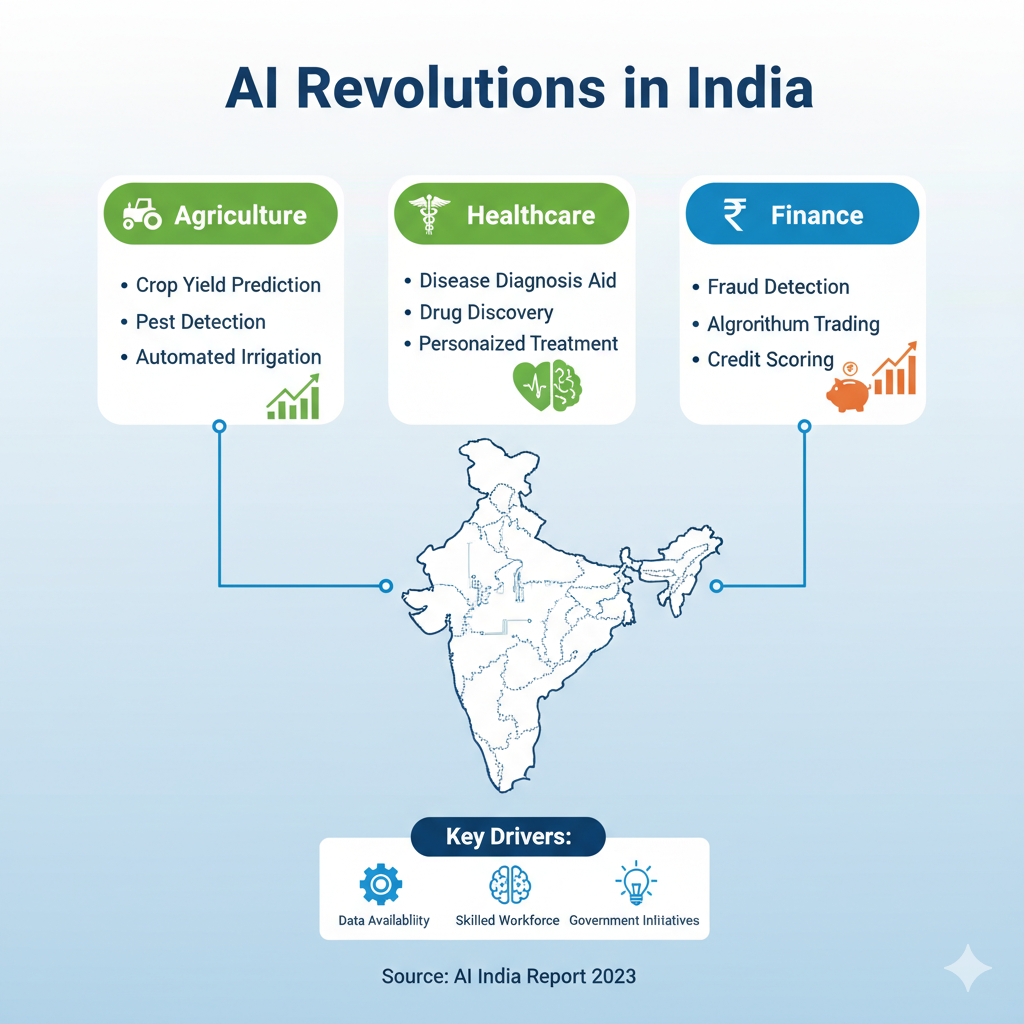
Artificial Intelligence (AI) is no longer the future of finance; it’s the present. From high-speed trading and fraud detection to personalized banking, AI-driven systems are optimizing operations, cutting costs, and unlocking new revenue streams. In the critical areas of insurance underwriting and credit lending, algorithms promise to make faster, more accurate, and more objective decisions than ever before.
But there’s a ghost in the machine.
This powerful new engine runs on data, and the data it’s fed often carries the baggage of our biased human past. When AI models learn from this data, they don’t just replicate these biases—they can amplify them, hiding them behind a mask of complex mathematics. This is algorithmic bias, and it’s not just an ethical puzzle for data scientists to solve.
For financial institutions, algorithmic bias is one of the most significant and rapidly emerging threats of our time. It represents a ticking time bomb of immense financial and reputational risk. A single biased algorithm, operating at scale, can lead to discriminatory outcomes that invite multi-million dollar regulatory fines, costly class-action lawsuits, and a catastrophic loss of public trust that can take decades to rebuild.
This is not a hypothetical problem. This is a business-critical challenge.
This article is an advanced-level guide for financial leaders, compliance officers, and tech teams. We will move beyond the basic definitions and dive deep into the real-world implications of bias in insurance and credit. We will explore the specific financial and reputational dangers, unpack the legal landscape, and provide a practical framework for detecting, mitigating, and managing these risks.
The goal isn’t to fear AI, but to master it. Let’s explore how to build an ethical AI framework that is not only compliant and fair but also more profitable and resilient in the long run.
Understanding the “Ghost in the Machine”: What is Algorithmic Bias in Finance?
Before we can tackle the risks, we must have a crystal-clear understanding of the problem. At its core, algorithmic bias refers to a situation where an AI system produces results that are systematically unfair or prejudicial to certain groups of people, often based on protected characteristics like race, gender, age, or religion.
The dangerous misconception is that “data is objective.” Data is not objective. Data is a reflection of the world it was collected from. If that world contains systemic biases (and it does), then the data will, too. An AI model trained on this data will simply learn these biases as a “pattern” to be replicated for maximum “accuracy.”
How Does Algorithmic Bias in Credit Scoring Actually Work?
For decades, credit scoring has relied on traditional data points like payment history and length of credit. Now, lenders are using AI to incorporate thousands of “alternative data” points—from utility bill payments to online shopping habits—to assess risk for “thin-file” applicants.
The danger arises when these data points are proxies for protected characteristics.
Consider this: An AI model might learn that people who shop at a certain discount grocery chain are a higher credit risk. On the surface, this seems data-driven. But what if that grocery chain’s locations are almost exclusively in low-income, predominantly minority neighborhoods? The algorithm hasn’t been told to use race or income, but it has found a very effective proxy for it.
The result is digital redlining. The AI may inadvertently deny loans to qualified applicants who live in the “wrong” zip code or shop at the “wrong” stores. This isn’t just unethical; it’s a potential violation of the Equal Credit Opportunity Act (ECOA), which explicitly forbids discrimination on the basis of race, color, religion, national origin, sex, marital status, or age.
Unpacking Algorithmic Bias in Insurance Underwriting
The same problem plagues the insurance industry. An auto insurer might use an AI model to set premiums. The model could incorporate data on your education level, your credit score, and even the “sophistication” of your email address.
The model might discover a correlation: people with non-Gmail addresses (like those from an ISP) and lower credit scores are more likely to file claims. But we know that credit scores themselves can be correlated with race and income due to historical economic disparities.
Suddenly, the AI is charging higher premiums to individuals in protected classes, not because of their driving record, but because of data points that are stand-ins for their socio-economic status. This can lead to a disparate impact—a legal term for a practice that seems neutral on its face but has a discriminatory effect on a protected group.
The Most Common Types of Bias in Financial AI Models
Bias can creep in at every stage of an AI’s lifecycle. Understanding these types is the first step to finding them.
- Historical Bias: This is the most common form, which we’ve discussed. The data itself (e.g., historical loan decisions made by human underwriters) is biased, and the AI learns this bias.
- Selection Bias: The data used to train the model isn’t representative of the real-world population. For example, if an AI is only trained on data from people who already have bank accounts, it may perform poorly and unfairly when assessing unbanked or underbanked populations.
- Measurement Bias: The data is collected or measured in different ways for different groups. For instance, if an insurer relies on telematics data from a smartphone app, it might unfairly penalize low-income drivers who can’t afford newer phones with more accurate GPS sensors.
- Algorithmic Bias (or Omitted Variable Bias): The model itself is the problem. It fails to account for important variables that would explain a “pattern.” The model might see a correlation between zip code and loan defaults, but it fails to see the true underlying driver (e.g., local economic downturns) and wrongly attributes the risk to the zip code itself.
The Ticking Time Bomb: Calculating the Real-World Financial and Reputational Risks
For a CEO, CFO, or Chief Risk Officer, the key question is: “What does this cost us?”
The answer is, “More than you can imagine.” The risks are not theoretical; they are tangible, quantifiable, and growing every day. We can break them down into two main categories: hard financial costs and the devastating impact of reputational damage.
The Financial Fallout: Regulatory Fines and Class-Action Lawsuits
This is the most direct and immediate financial risk. Regulators are not just aware of AI bias; they are actively targeting it.
- Massive Fines: In the United States, agencies like the Consumer Financial Protection Bureau (CFPB), the Department of Justice (DOJ), and the Office of the Comptroller of the Currency (OCC) have all issued guidance stating that fair lending laws (like ECOA and the Fair Housing Act) apply to AI models, regardless of their complexity. A finding of discrimination can lead to fines in the tens or even hundreds of millions of dollars.
- Costly Lawsuits: We are on the precipice of a new wave of class-action litigation. All it takes is one headline about your bank’s “sexist” or “racist” algorithm to trigger dozens of lawsuits. The legal fees, discovery costs (which are massive for complex AI models), and potential settlement amounts represent an existential financial threat.
- Forced Remediation: A regulatory order might not just fine you; it might force you to scrap your multi-million dollar AI model and revert to a less efficient, more expensive manual process. Or, it could require you to pay restitution to every customer who was overcharged or unfairly denied credit over a period of years. The financial unwinding of a biased model’s decisions can be astronomical.
We recently covered the changing landscape of AI regulations in the financial sector in a separate analysis, and the trend is clear: enforcement is ramping up.
How Reputational Damage from Biased Algorithms Can Destroy Trust
Trust is the single most valuable asset a financial institution possesses. It’s the bedrock of the entire industry. Algorithmic bias eats away at this trust like acid.
- The Viral Headline: In 2019, a major tech company’s new credit card was accused of being “sexist” after it was reported that it gave men far higher credit limits than their wives, even when they shared assets and had higher incomes. The story went viral, sparking a regulatory probe and becoming a PR nightmare.
- Customer Churn: Today’s consumers, especially younger generations, are highly motivated by ethics. If your bank or insurance company is exposed for using biased practices, you will lose customers. They will not only leave, but they will also tell everyone on social media why they are leaving.
- Inability to Attract Talent: The best and brightest data scientists, engineers, and executives do not want to work for a company known for unethical practices. A reputational scandal makes it harder and more expensive to recruit and retain the top talent you need to innovate.
- Stock Price Volatility: Markets hate uncertainty and scandal. A major bias investigation is a material risk that must be disclosed to shareholders, and the resulting news can send your stock price tumbling, wiping out billions in market capitalization.
The Hidden Costs: Market Exclusion and Stifled Innovation
The risks everyone talks about are the fines and the headlines. The risks that are just as damaging are the ones you don’t see.
- Leaving Money on the Table: A biased algorithm isn’t just unfair; it’s inaccurate. If your model is incorrectly flagging qualified women or minority entrepreneurs as “high-risk” (a false negative), you are literally turning away good, profitable customers. You are ceding market share to a competitor who has a fairer, and therefore more accurate, model that can identify these creditworthy individuals.
- The “Black Box” Problem: If your own team doesn’t understand how your AI model is making decisions, you have a massive governance problem. You can’t innovate confidently. You can’t expand into new markets. You are flying blind, completely at the mercy of a “black box” that could be accumulating huge, unseen risks.
Building a Fairer Future: A Practical Guide to Detecting and Mitigating AI Bias
The situation is serious, but it is not hopeless. The good news is that “Ethical AI” is no longer just a buzzword. It is a mature field with a growing set of tools, techniques, and best practices. You can build AI systems that are both highly predictive and demonstrably fair.
This requires a multi-layered approach that embeds fairness into every stage of the AI lifecycle.
Step 1: Start with Data – Strategies for Reducing Bias Before the Model is Built
You cannot fix a bias problem if you don’t know it exists. The “garbage in, garbage out” principle is paramount.
- Source Data Audits: Before you even think about training a model, audit your source data. Are there historical gaps? Are certain groups underrepresented? Are there data fields (like zip code) that are highly correlated with protected classes?
- Invest in Training Data Diversity: If your data is skewed, go get more. This might mean partnering with community banks, credit unions, or fintechs that serve underrepresented populations. It might mean investing in new data collection methods. This isn’t a cost; it’s an investment in model accuracy.
- Data Pre-processing Techniques: There are statistical methods to “clean” data before it’s fed to the AI. This can include re-sampling (to balance the data), re-weighting (to give more importance to underrepresented groups), or even removing or modifying proxy variables that are causing discrimination.
Step 2: Choosing the Right Fairness Metrics for Your Financial Model
This is one of the most critical—and most “advanced”—steps. “Fairness” is not a single, universal concept. It’s a series of statistical trade-offs. A model that is “fair” by one definition may be “unfair” by another.
Your legal, compliance, and business teams must be involved in deciding what fairness means for your institution. Common metrics include:
- Demographic Parity: This metric checks if the model approves loans (or offers low premiums) at the same rate for all groups. (e.TEST: 15% of men and 15% of women are approved).
- Equalized Odds: This is a stronger metric. It checks if the model has the same accuracy (true positive rate and false positive rate) for all groups. (e.g., Of all the qualified men, 90% are approved. Of all the qualified women, 90% are also approved).
Choosing your metric is a policy decision, not just a technical one. For a deep dive into the technical details, this MIT paper on fairness metrics is an excellent resource.
Step 3: In-Processing and Post-Processing Techniques to Actively Mitigate Bias
Once you have a fairness metric, you can use it to guide the AI.
- In-Processing: This involves adding “fairness constraints” during the model’s training process. You essentially tell the algorithm, “I want you to be as accurate as possible, but you are not allowed to violate this specific fairness metric.” The model then learns to make predictions within that constraint.
- Post-Processing: This happens after the model has made a prediction. You take the model’s “raw score” and adjust it to achieve fairness. For example, the model might say a score of 700 is the cut-off for a loan. A post-processing step might adjust this threshold, setting it at 695 for a demonstrably disadvantaged group and 705 for an advantaged group, in order to achieve the same rate of qualified approvals.
The Critical Role of AI Model Auditing for Fairness
You are not done when the model is launched. In fact, you’ve just begun. Bias can re-emerge over time, a problem known as model drift.
Your models must be subject to continuous AI model auditing for fairness. This means:
- Regular Testing: Your model governance team should be testing your live models (e.g., quarterly) against your chosen fairness metrics.
- Red Teaming: Have an independent team (either internal or a third party) actively try to break your model. They should test it with new data and edge cases to see if they can find and expose hidden biases.
- Logging and Monitoring: You must log all model predictions and the demographic data of applicants. This creates an audit trail so you can prove to regulators exactly how your model is performing and what steps you’re taking to correct any drift.
Beyond the Math: Why Governance, Transparency, and Explainability (XAI) are Non-Negotiable
A purely technical solution is not enough. You can have the fairest algorithm in the world, but if it’s deployed within a weak governance structure, you are still at risk. Ethical AI requires a holistic framework that combines people, processes, and technology.
What is Explainable AI (XAI) in Credit Decisions and Why Does it Matter?
For years, the most powerful AI models (like deep learning) were “black boxes.” They gave you an answer, but they couldn’t tell you why. This is a non-starter in finance.
Under the ECOA, if you deny a customer credit, you are legally required to provide them with an “adverse action notice” that gives the specific and principal reasons for the denial. If your AI is a black box, you cannot do this, and you are breaking the law.
Enter Explainable AI (XAI). This is a set of tools and techniques that allow you to “look inside” the black box and understand the drivers of a specific decision.
- Global Explainability: This tells you the main factors the model considers important overall (e.g., “Payment history is the #1 factor, credit utilization is #2”).
- Local Explainability: This is the-game changer. It tells you the exact reasons for a single decision (e.g., “You were denied because: 1. Your credit utilization is 85%, which is too high. 2. You have a recent delinquency on your record.”).
XAI is no longer optional. It is the key to regulatory compliance, internal model validation, and building customer trust.
Building a Robust AI Governance Committee: Who Should Be at the Table?
Your data science team cannot and should not be making ethical policy decisions in a vacuum. Your institution needs a centralized AI Governance Committee or Ethical AI Review Board.
This committee must be cross-functional and empowered by the C-suite. It must include leaders from:
- Data Science: To explain what is technically possible.
- Legal & Compliance: To explain what is legal and compliant.
- Ethics: To guide the discussion on what is right.
- Business Lines: To explain the business needs and impact.
- Risk Management: To assess the model against the firm’s overall risk appetite.
This committee’s job is to review and approve all high-risk AI models before they are deployed, setting the policies for fairness, testing, and transparency. Our partners at EthicalGovernance.org provide excellent frameworks for setting up these committees.
Human-in-the-Loop: The Smartest Way to Supervise Financial AI
The goal of AI is not to replace human expertise but to augment it. The safest and most effective AI systems use a Human-in-the-Loop (HITL) approach.
This means the AI doesn’t make all decisions autonomously. Instead, it flags high-risk or borderline cases for a human expert to review.
- Example: An AI underwriting model might auto-approve the 70% of “easy yes” applications and auto-decline the 10% of “hard no” applications. The remaining 20%—the complex, “on-the-bubble” cases—are routed to a senior human underwriter.
- Benefits: This approach gives you the speed and efficiency of AI for the majority of cases, while still applying human judgment and nuance where it matters most. It also creates a valuable feedback loop: the human underwriter’s final decision can be used to retrain and improve the AI model over time.
Staying on the Right Side of the Law: Navigating AI Compliance in Finance
A robust ethical AI program is your best defense against legal and regulatory risk. The legal landscape is evolving fast, but the principles are old. Regulators are simply applying existing anti-discrimination laws to new technologies.
How the Equal Credit Opportunity Act (ECOA) Applies to AI Credit Models
As mentioned, ECOA is the big one. It forbids discrimination in any aspect of a credit transaction. The key legal concept for AI is disparate impact. You may not intend to discriminate, but if your algorithm produces a discriminatory outcome, you are liable. This is why you must test your models for disparate impact across all protected classes (race, gender, age, etc.).
The Fair Housing Act (FHA) and Algorithmic Bias in Mortgage Lending
Similar to ECOA, the FHA prohibits discrimination in all housing-related transactions, which includes mortgage lending and property insurance. The FHA is what makes “digital redlining” (using zip codes or other location-based proxies) so legally dangerous for mortgage lenders and home insurers.
A Look Ahead: What the EU AI Act Means for Global Financial Services
Don’t make the mistake of thinking this is just a US-based issue. The European Union’s AI Act is a landmark piece of legislation that will have global ripple effects.
The Act classifies AI systems based on risk. Many financial applications—like credit scoring and insurance underwriting—are explicitly designated as “high-risk.” This designation comes with a heavy compliance burden, including mandatory requirements for:
- Data governance and quality.
- Robust technical documentation.
- Transparency and explainability.
- Human oversight.
- Strict testing for accuracy, security, and fairness.
Any financial institution that serves EU customers (or wants to) will need to comply. This is setting a new global standard. We’ve written an extensive guide on preparing your bank for the EU AI Act that you can reference.
Conclusion: From Risk to Responsibility – Building Trust in Financial AI Systems
The rise of AI in finance presents a profound choice.
We can chase short-term efficiency gains by deploying opaque, un-audited “black box” models. This is a path fraught with immense, accumulating risk. It’s a gamble that exposes institutions to catastrophic financial penalties and a complete erosion of public trust.
Or, we can choose a different path.
We can embrace the principles of Ethical AI and Responsible Innovation. This path involves building a robust governance framework, demanding transparency and explainability from our systems, and relentlessly testing for and mitigating bias. It requires treating fairness not as an afterthought or a compliance checkbox, but as a core pillar of model accuracy and business strategy.
This second path is not the easier one. It requires investment, cultural change, and a new kind of collaboration between tech, legal, and business teams.
But it is the only sustainable path forward.
The financial institutions that master this will not only avoid the significant financial and reputational risks of algorithmic bias; they will gain a profound competitive advantage. They will build more accurate models, reach new and underserved markets, and earn the most valuable commodity of all: the enduring trust of their customers and the regulators who protect them.
Frequently Asked Questions About Ethical AI and Algorithmic Bias in Finance
1. What is the biggest financial risk of algorithmic bias?
The biggest single risk is a combination of large-scale regulatory fines and class-action lawsuits. A finding of systemic discrimination (even if unintentional) can result in hundreds of millions of dollars in penalties and restitution payments to affected customers.
2. How can an AI algorithm be biased if it doesn’t use race or gender data?
This is a key concept. Bias often comes from proxy variables. The AI may not use “race,” but it might use “zip code,” “credit score,” or “shopping habits,” which are often highly correlated with race and income. The AI learns this correlation and inadvertently discriminates.
3. What is the difference between “ethical AI” and “responsible AI”?
The terms are often used interchangeably. “Ethical AI” generally refers to the moral principles and values that guide AI development (e.g., fairness, accountability). “Responsible AI” is more about the governance and practice of putting those principles into action (e.g., testing, auditing, and having human oversight).
4. What is XAI (Explainable AI) and why is it important for compliance?
XAI (Explainable AI) is a set of techniques that allow humans to understand how an AI model made a specific decision. This is critical for compliance with laws like the ECOA, which requires lenders to provide “adverse action notices” with the specific reasons why a person was denied credit. If your AI is a “black box,” you cannot provide these reasons and are not compliant.
5. Isn’t bias a human problem, too? Aren’t algorithms still better?
Yes, human underwriters are also subject to bias. The promise of AI is to be better and fairer. However, the danger of AI is that it can scale a single bias to millions of decisions instantly. A biased human might impact 100 applications; a biased algorithm impacts all of them. The goal is not “AI vs. human” but to use AI and human-in-the-loop systems to be demonstrably fairer than a human-only process.
6. What is “disparate impact” and how does it relate to AI?
Disparate impact is a legal concept where a policy or practice appears neutral but has a disproportionately negative effect on a protected group. This is the primary legal danger for AI models. Your intent doesn’t matter; if your neutral-seeming algorithm (e.g., one that uses 1,000 data points) results in far more denials for women or minorities, you could be held liable for disparate impact.
7. How do I start building an ethical AI governance program?
Start by forming a cross-functional committee with members from legal, compliance, risk, data science, and business lines. Your first task should be to create an “AI inventory” (list all AI models in use) and conduct a risk assessment to identify which ones are “high-risk” (e.g., those used for credit or insurance).
8. What are “fairness metrics” in machine learning?
These are statistical tests used to measure a model’s fairness. There are many different types, such as “demographic parity” (does the model approve all groups at the same rate?) and “equalized odds” (is the model equally accurate for all groups?). Your institution must decide which metrics align with your legal and ethical goals.
9. Can we just remove biased data to fix the problem?
It’s not that simple. First, it’s very hard to identify all bias, as it’s often embedded in complex proxy variables. Second, simply removing a variable (like zip code) might not work; the AI may find another combination of variables (like local store data and IP addresses) that acts as the exact same proxy. A more robust approach involves a combination of data preprocessing, in-processing constraints, and post-processing adjustments.
10. What is a “Human-in-the-Loop” (HITL) system?
A HITL system combines AI with human judgment. The AI handles the majority of simple, clear-cut decisions, but it is programmed to flag complex, borderline, or high-risk cases and route them to a human expert for a final review. This gives you the speed of AI and the nuance of human wisdom.
11. How does algorithmic bias in insurance differ from bias in credit?
The mechanism is very similar (using proxies to discriminate), but the impact is different. In credit, the risk is unfair denial of opportunity (e.g., a loan for a home or business). In insurance, the risk is unfair pricing (e.g., charging protected groups higher premiums) or denial of coverage, which can have devastating financial consequences for families.
12. What is “model drift” and how does it relate to fairness?
Model drift is when an AI model’s performance gets worse over time because the real-world data it’s seeing no longer matches the data it was trained on. This is a huge risk for fairness. A model that was perfectly fair when launched can “drift” into a biased state as market conditions or customer behaviors change. This is why continuous monitoring and auditing are essential.
13. What is the EU AI Act and why should a US bank care?
The EU AI Act is a major regulation from the European Union that classifies AI systems by risk. Many financial applications (like credit scoring) are deemed “high-risk” and will face strict compliance rules on transparency, fairness, and human oversight. Any US bank that operates in the EU or serves EU citizens will have to comply, and it is expected to set a new global standard that other countries, including the US, may follow.
14. What is “digital redlining”?
Redlining was the historical and illegal practice of denying services (like loans) to residents of certain neighborhoods based on their racial or ethnic composition. “Digital redlining” is the modern, algorithmic version of this, where an AI model unintentionally learns to do the same thing by using data like zip codes, home values, or other location-based proxies as a stand-in for race.
15. Besides legal and financial risk, why should my company care about ethical AI?
Because it’s good business. Building fair, transparent, and explainable AI is the single best way to build long-term trust with your customers. It also leads to better, more accurate models that can identify creditworthy customers your biased competitors are ignoring. Mastering ethical AI is a powerful competitive advantage that will define market leaders for the next decade.